
-
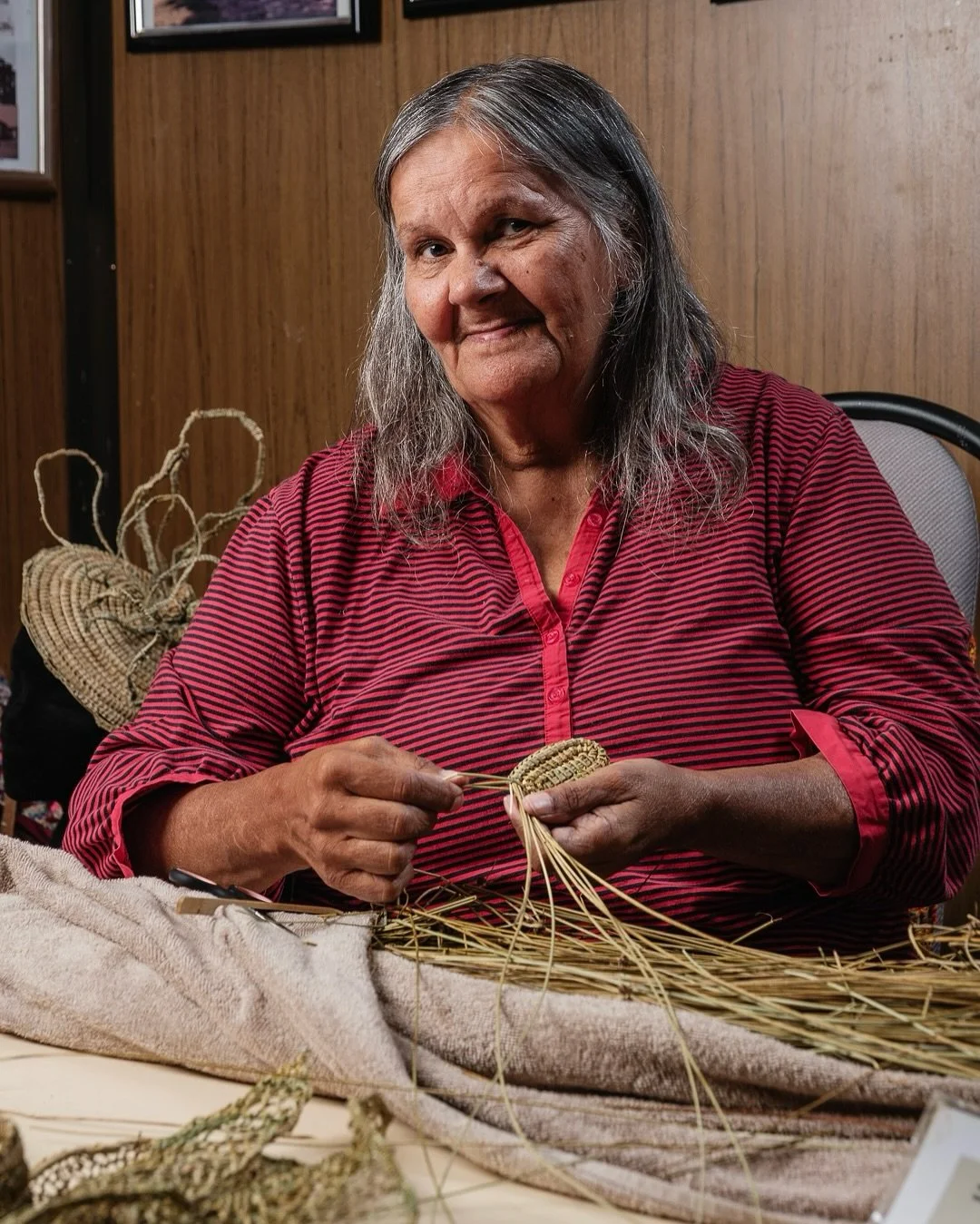
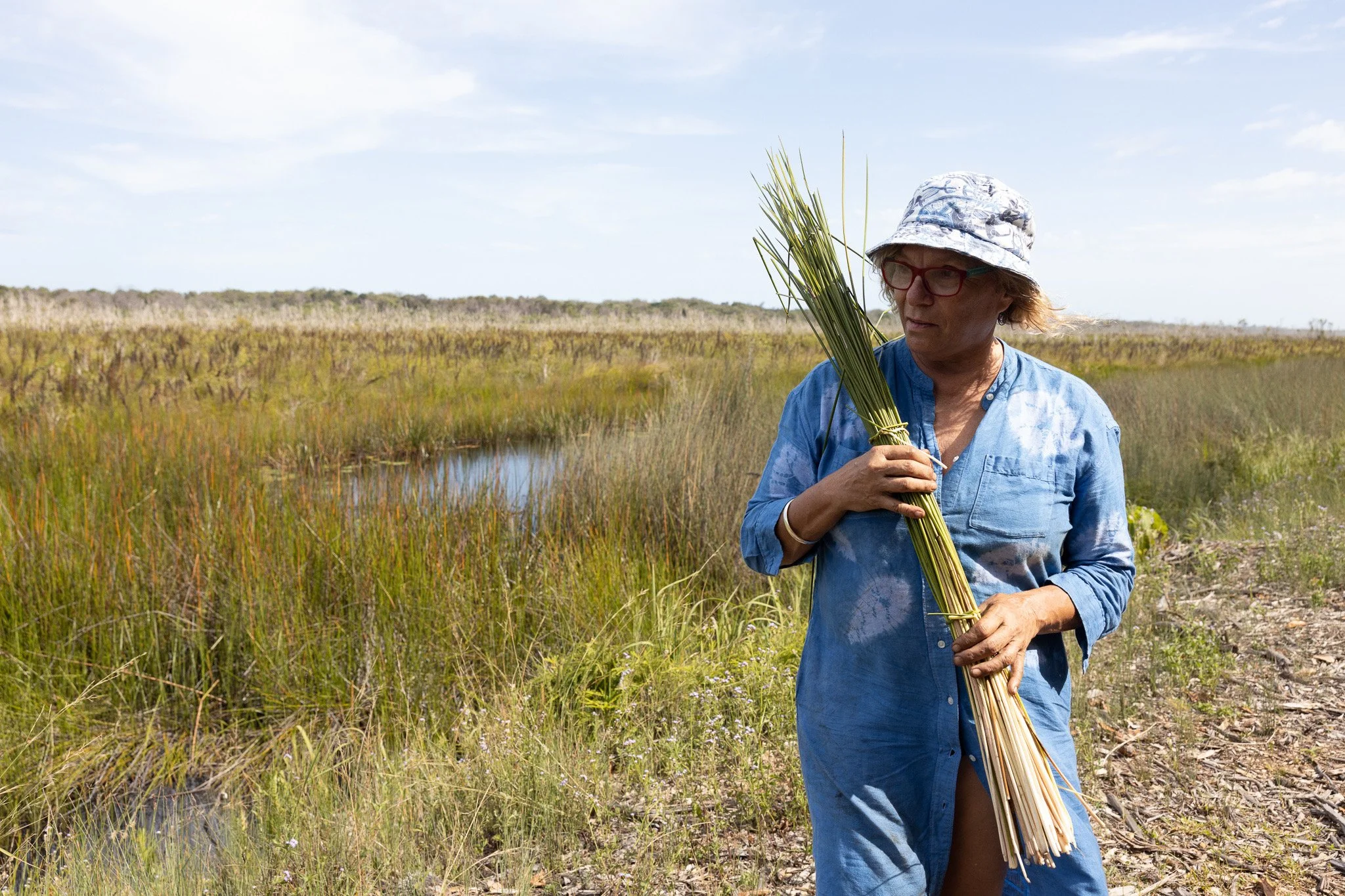
Aunty Ellen Trevorrow is a proud Ngarrindjeri woman and prolific cultural weaver from the Coorong coastal region southeast of Tarntanya (Adelaide). She harvests rushes from the spiny flat sedge plant on Ngarrindjeri Country and creates traditional objects, such as sister baskets and mats, as well as contemporary sculpture. Aunty Ellen’s innate teaching abilities have led her to conduct numerous workshops, inspiring many Ngarrindjeri weavers to follow in her footsteps.
Photo by Conor Patterson
-
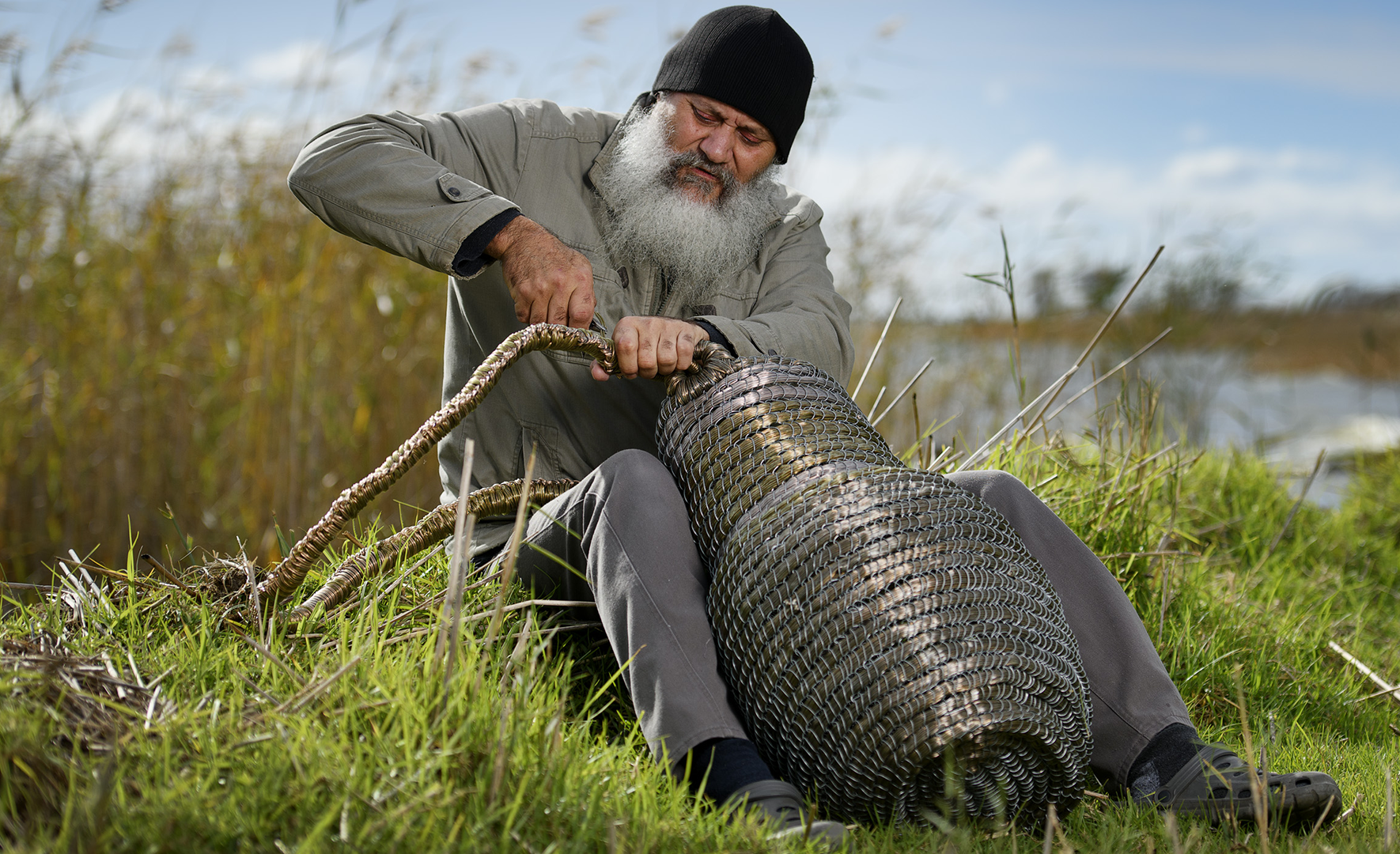
Robert Wuldi is a Ngarrindjeri, Tangani, Yaraldi, Meintangk, Portaruwutj, Ngarkat, Peramangk , Nganguruku , Erawirung, Ramindjeri & Bunganditj man. Born at Patawalong (Glenelg) on the Kaurna Territories, Wuldi is a lifelong Artist and maker, now residing on the shores of Lake Alexandrina. His art practice is informed by his rich cultural heritage made up of many First Nations, clans & tribes.
His family is one of the most documented and studied in SA with many contributions made by family members to the South Australian Museum over the history of the State. In 1986 Robert trained in the Performing Arts, touring nationally and internationally, blazing many trails in Theatre, Film, Radio and Television from the 1980s - 2000s
He then switched gears to focus solely on Visual Arts specialising in sculpture. He works in stone, wood, metal, skins, clay, acrylic and textiles. He is a self-taught weaver of wire galvanized (fencing wire) and copper (machines).
His public works can be seen on Ramindjeri territory, Goolwa, Peramangk territory Springlake, Laratinga, Mt Barker & Brukungka, and Ngarrindjeri territory, Raukkan. In 2028 he was the winner, Emerging Artist and in 2025 he was the runner up Indoor Sculpture Category of the Brighton Jetty Sculpture Competition. He has exhibited at Salon Des Refuses, Larakia territory, Darwin; Fabrik Arts & Heritage, Peramangk territory, Lobethal; Murray Bridge Regional Gallery, Ngarrindjeri territory; for Tarnanthi at Fleurieu Art House, Kaurna, Ngarrindjeri, Ramindjeri territories; and has works held in the collection of the South Australian Museum.
Photo by Ben Searcy.
-
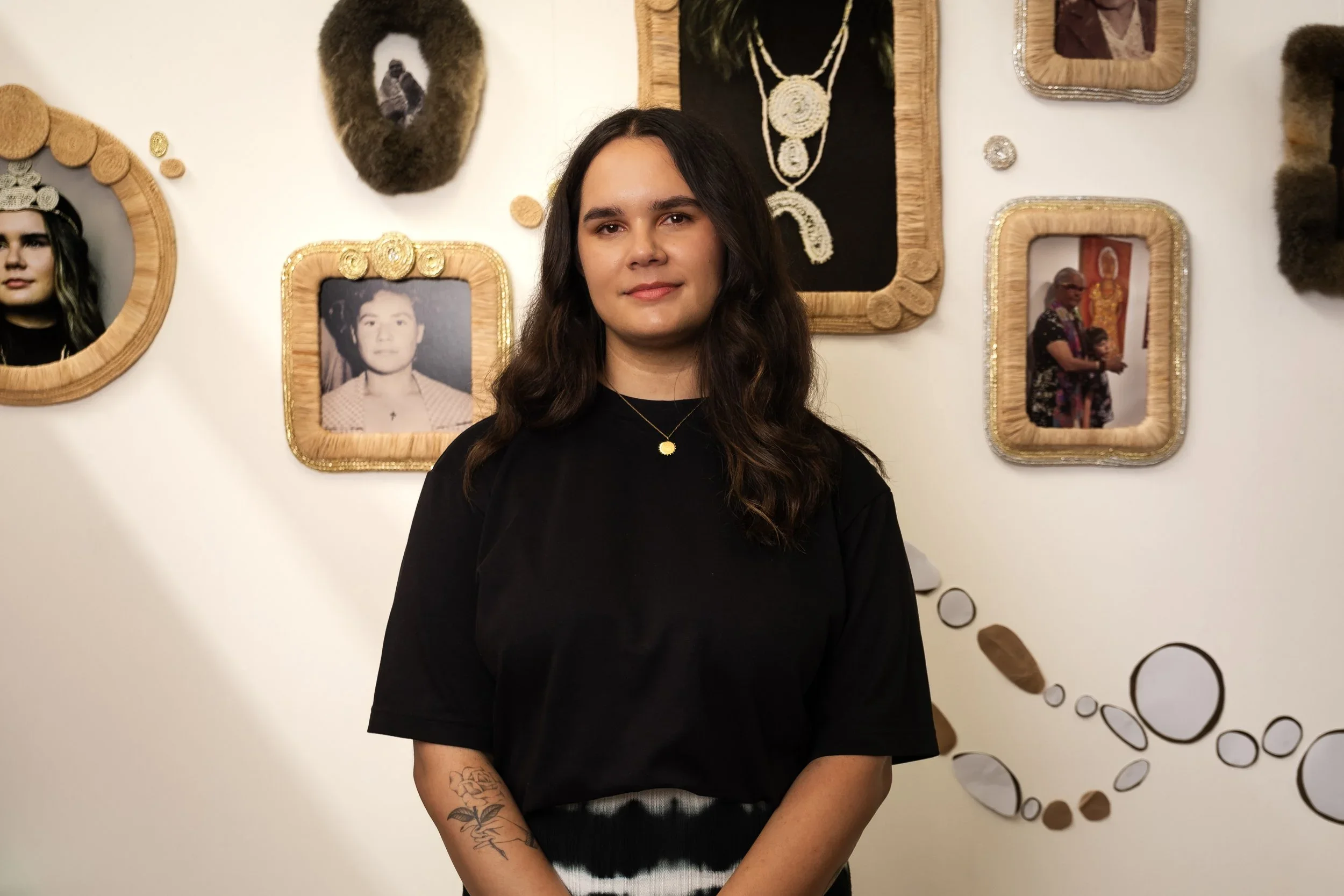
Carly Tarkari Dodd is a Kaurna, Narungga, and Ngarrindjeri artist and curator whose practice centres on weaving, jewellery, sculpture, and cultural storytelling. Taught traditional Ngarrindjeri weaving techniques by Aunty Ellen Trevorrow at a young age, Dodd continues this legacy by combining ancestral knowledge with contemporary materials to create powerful objects of cultural resilience. Her work explores themes of First Nations activism, sovereignty, and identity, often juxtaposing Indigenous experience with the ongoing impacts of colonisation.Through adornment and regalia, Dodd highlights the strength and beauty of cultural continuation, transforming materials like raffia, ribbon, and fabric into bold wearable statements. Her work has been featured on the David Jones Indigenous Fashion Projects Runway at Australian Fashion Week, in Vogue Australia, and across national and international exhibitions. In 2023, she was a finalist in the MAKE Award: Biennial Prize for Innovation in Australian Craft and Design and in 2025, she was named a finalist in the prestigious Rigg Design Prize.
Dodd was recognised as South Australia’s NAIDOC Young Person of the Year in 2018. Based on Kaurna Country, she continues to pass on knowledge through workshops and community engagement, with her works held in both public and private collections across Australia.
Photo by Connor Patterson.
-
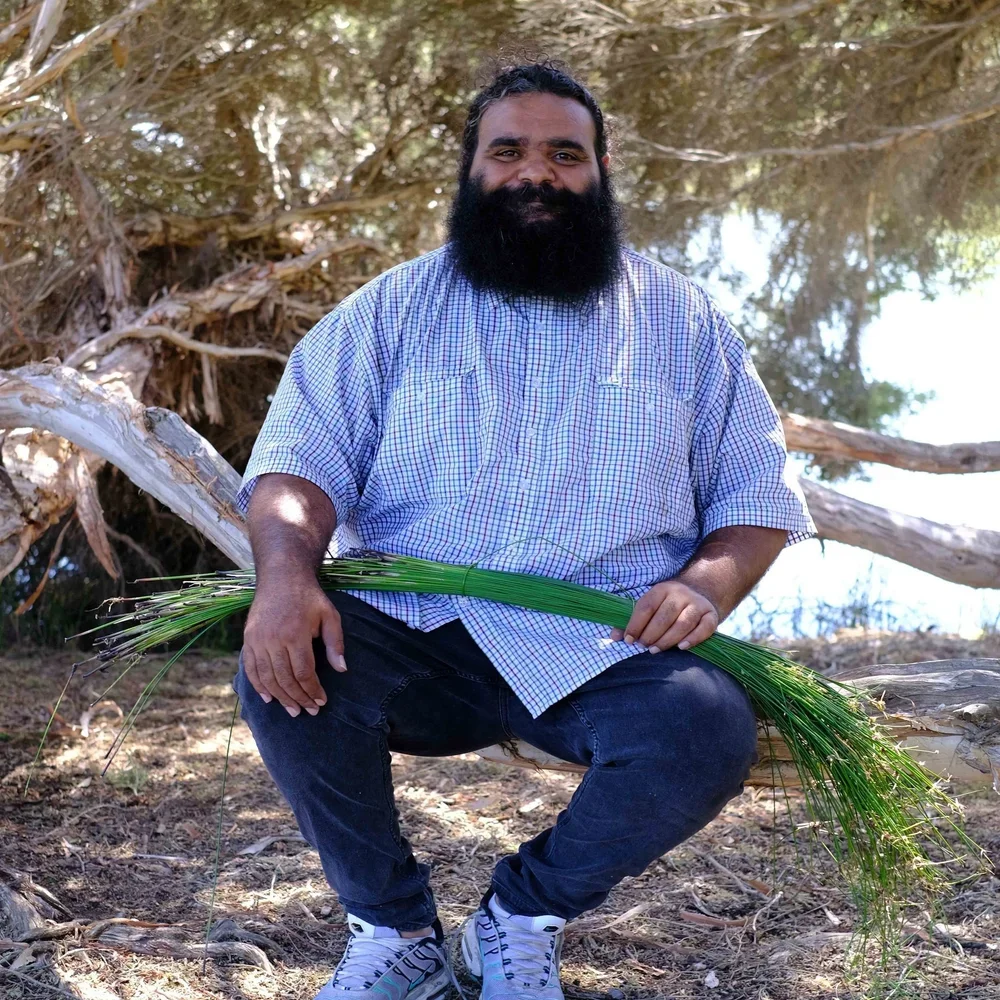
Cedric Varcoe is a Ramindjeri-Ngarrindjeri and Narangga artist with strong family connections to Raukkan and Point Pierce, South Australia. A painter and weaver, Cedric depicts the creation stories of his Ngarrindjeri lands and waters, from the lower River Murray and the Lower Lakes to the Coorong, the South Coast to Kangaroo Island. His work talks about Nurungeri, an important story for the Ngarrindjeri people. Nurungeri is a giant ancestor whose great adventure shaped the creation of the lands and waters. He is also a law giver, instigating laws and ceremonies about connection and belonging. Cedric Varcoe’s work is held in private and public collections across Australia and overseas.Cedric shares stories through his works of art, while encouraging people to connect to their miwi, the spirit that makes us and shapes us as a person and connects us to our totems and life that belong to Country. He has worked extensively facilitating and collaborating on community arts projects in regional South Australia, including with incarcerated men through recent Ku Arts workshops. Cedric is currently a Director on the Board of Ku Arts.
Photo by Mel Henderson, courtesy of Ku Arts.
-
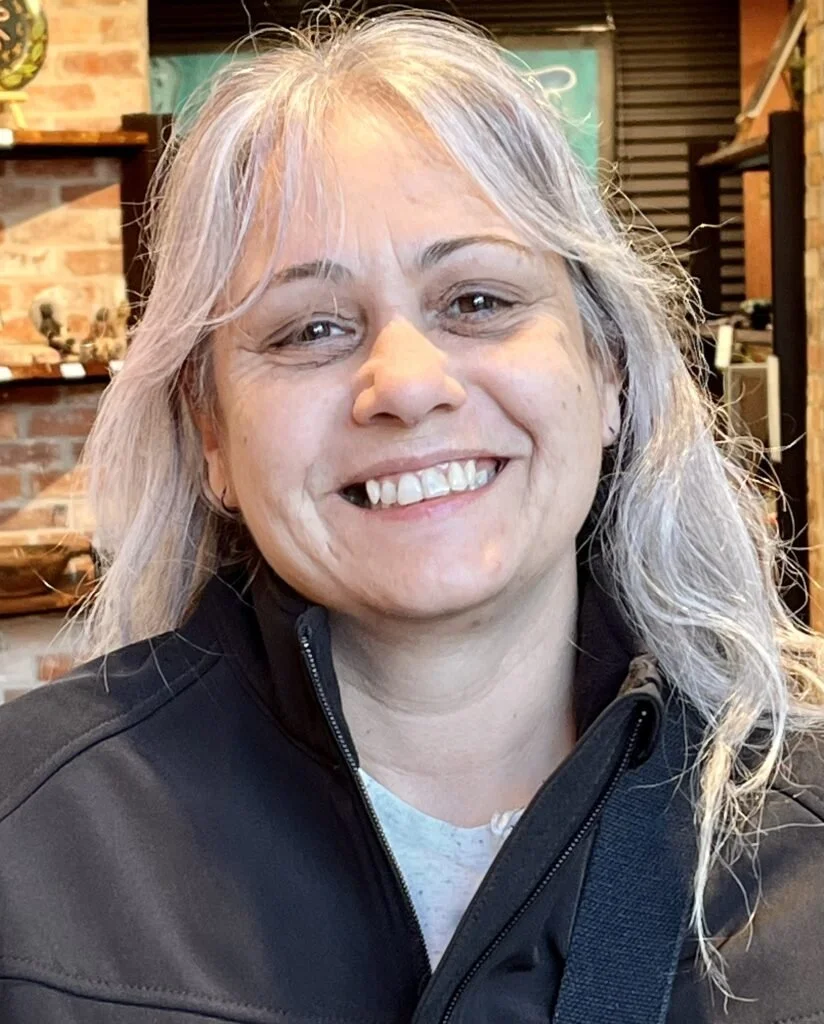
Donna is a Yorta Yorta artist, currently living in Ballarat on Wathaurong country. Originally taught to weave as a young girl, Donna rekindled her love of weaving when she participated in a workshop with master weaver Bronwyn Razem (Gunditijmara). Donna has also worked with the Pepperminarti NT community, where she learnt different techniques of weaving.
Donna uses a blanket stitch as it is a strong, sturdy stitch that creates baskets that are both practical and beautiful, and uses NZ Flax in her baskets, which she collects from her local area. Although NZ Flax is not indigenous to Australia, it is strong and wide, making it perfect for Donna’s style of weaving.
Donna’s weaving work has been featured in Melbourne Town Hall, National Gallery of Victoria, Koorie Heritage Trust and Deakin University collections. She has also worked on many collaborative works with other First Nation artists.
Photo courtesy of Perridak Arts.
-
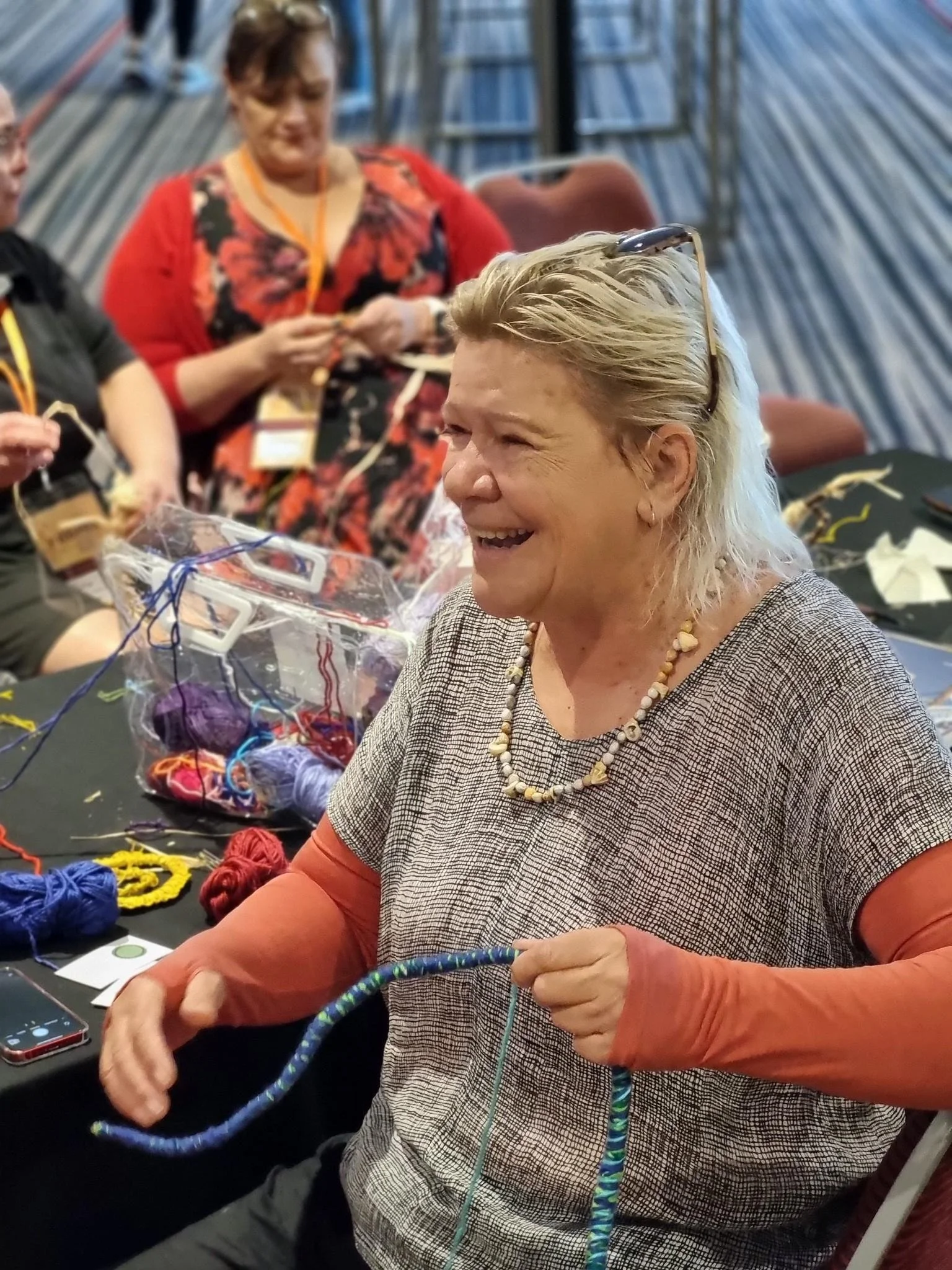
Sharyn Egan is a painter, weaver and sculptor. As a member of the Stolen Generation who grew up in the New Norcia Mission School much of her artwork is a commentary on her life as a Nyoongar woman and the associated trauma, emotions and deep sense of loss and displacement experienced by Aboriginal people.
Never afraid of experimentation and exploration, she works in numerous media, including painting, sculpture, woven forms and site specific installations, often choosing materials, such as ochres, resins and grasses that connect to land, especially her home near the lake system in the southern suburbs of Perth. Her woven works include traditionally styled contemporary forms and baskets, as well as larger scale sculptural forms.
Sharyn began her art career at the age of 37 when she enrolled in a Diploma of Fine Arts at the Claremont School of Art in Perth. She completed this course in 1998 and continued her education at Curtin University, first completing the Associate Degree in Contemporary Aboriginal Art in 2000 and a Bachelor of Arts (Arts) in 2001. She has also been awarded a Certificate VI in Training and Education and has worked as an art lecturer, curator and art facilitator in schools, community groups and health organisations.
In recent years, Sharyn has been awarded several prestigious and prominent public art commissions, at the new Perth Stadium, on Elizabeth Quay, Yagan Square and the Scarborough Beach Redevelopment. She is a frequent exhibitor and invited artist at Sculpture by the Sea, Bondi and Cottesloe.
Photo courtesy of the artist.
-
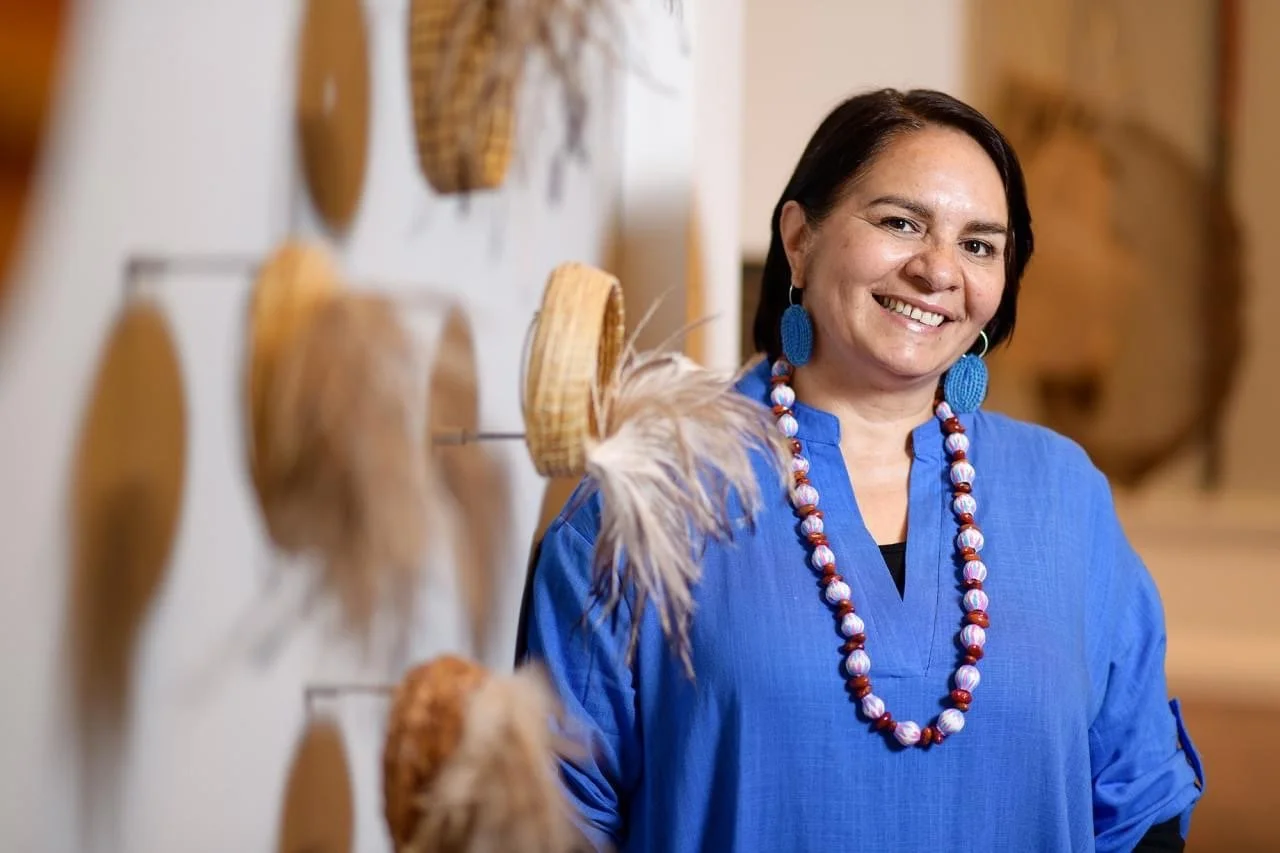
Living on Narungga country in Moonta Bay on the Yorke Peninsula, Sonya Rankine is a Ngarrindjeri, Ngadjuri, Narungga & Wirangu artist.
In 2019, Sonya established Lakun Mara–meaning ‘weaving hand’ in Ngarrindjeri–to promote her art-making practice and weaving workshops. Weaving + culture is at the heart of her practice; it is strongly linked to cultural maintenance, survival and revival. Lakun Mara represents the connection to her Ngarrindjeri heritage and culture of the lower Murray, Coorong and Lakes area of South Australia. It honours the beginnings of her love of weaving as taught to her by Ngarrindjeri Master weaver Aunty Ellen Trevorrow. Weaving is also culturally linked to Sonya’s Ngadjuri heritage of the Mid-North of South Australia, as both First Nations share the same traditional weaving technique and materials.
Sonya is also a singer, songwriter, poet and emerging playwright. In 2024, she was the songwoman for Jacob Boehme’s theatre work Gurranda, stagedat Her Majesty's Theatre for the Adelaide Festival.She was awarded the 2024 Brink Productions First Nations Fellowship, a twelve-month supported residency to develop new writing and storytelling for theatre. She was named the NAIDOC SA Artist of the Year in 2021, won the Don Dunstan Foundation Our Mob Emerging Artist Prize in 2019, and completed a Guildhouse and City of Adelaide Catapult mentorship in 2022.
Photo by Ben Scarce.
-
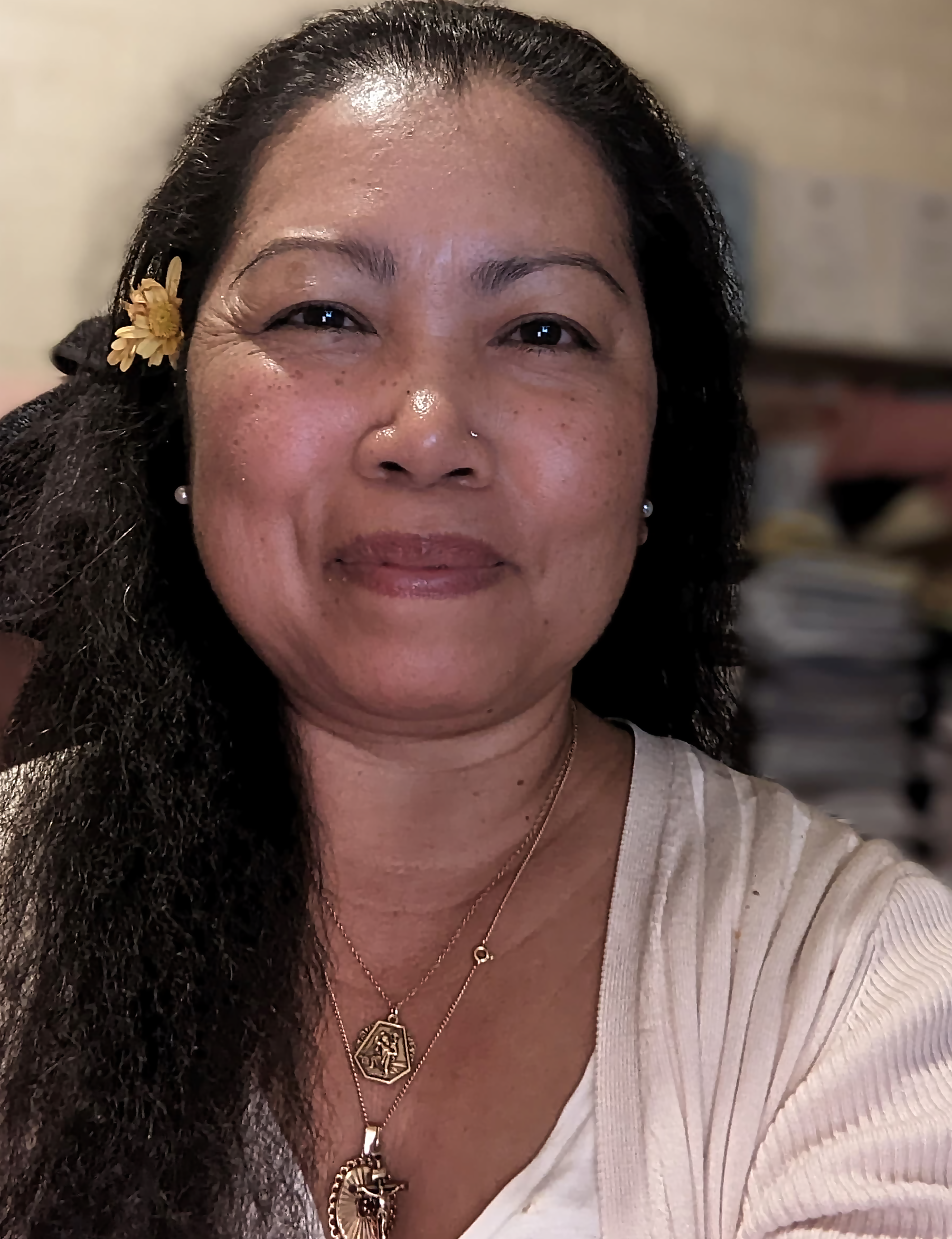
Dr. Jelina Haines is a pivotal collaborator on this year's JamFactory 2025 ICON project - Weaving Through Time. With a proud Austronesian and Indigenous Filipino heritage, Jelina brings 23 years of profound experience in visual art design to this exhibition, having spent 21 of those years working alongside Aunty Ellen Trevorrow. Her instrumental role and expertise in design have been vital in bringing the ICON project with Aunty Ellen to fruition. Jelina's artistic journey includes 13 solo exhibitions and 37 selected exhibitions, showcasing her innovative wearable artworks both locally and internationally. Her wearable arts are held in private collections across 18 countries, a testament to her local and global impact in the field of visual art design.
Beyond her artistic achievements, Jelina's career is distinguished by over 23 academic, arts, and community service awards. Her expertise and dedication are beautifully exemplified in her long-standing, mutual friendship and collaboration with Aunty Ellen, a reciprocal partnership that truly embodies the spirit of this year's ICON exhibition.
Photo courtesy of the artist.
-
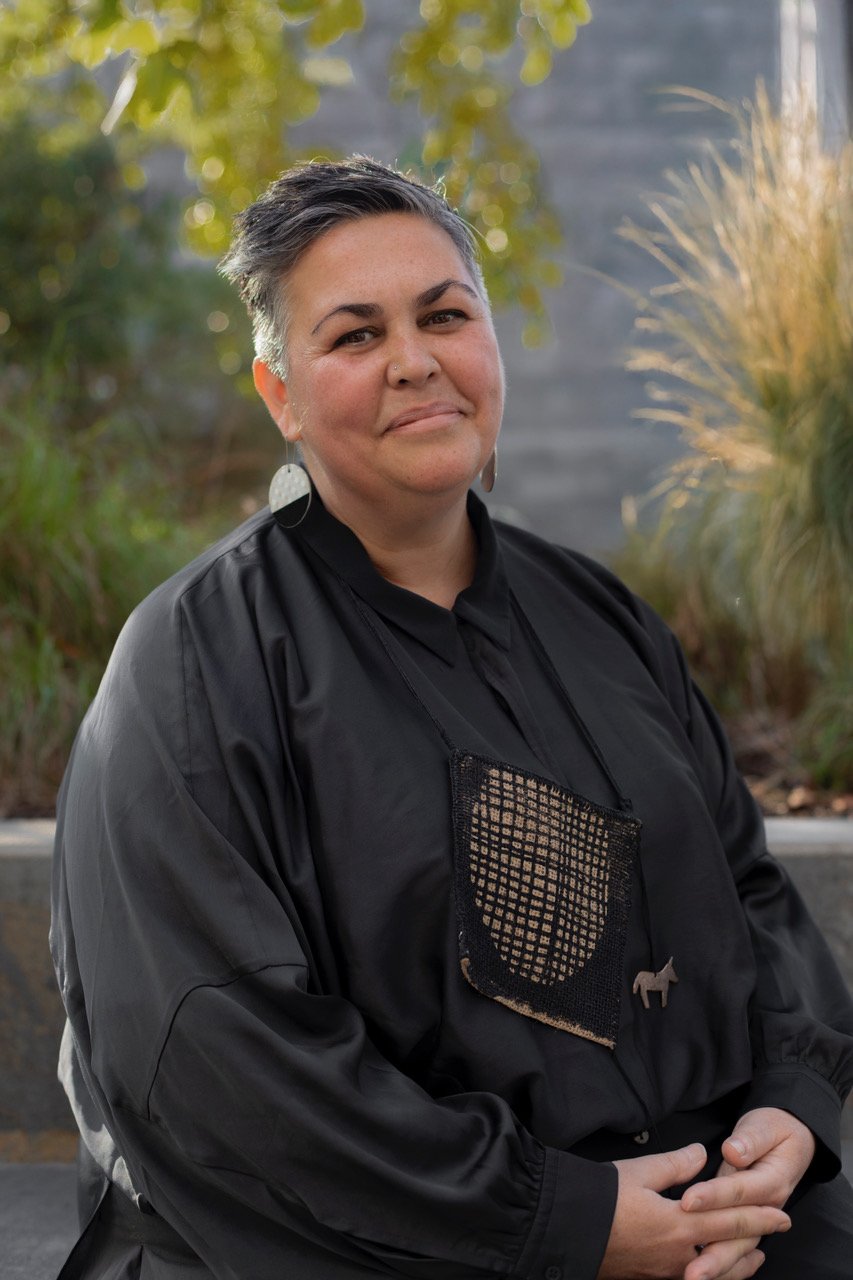
Lisa Waup is a mixed-cultural, First Nations artist and curator, born in Narrm (Melbourne). Her multidisciplinary practice spans weaving, experimental printmaking, sculpture, fashion, body adornment and digital art. With a deep connection to the symbolic power of materials, her work reflects her personal experiences, family history, Country and broader historical narratives.
Lisa has exhibited extensively, with solo exhibitions at Kluge-Ruhe, Virginia, USA (2024), Gertrude Glasshouse, Narrm (2024), Australian Print Workshop - Dowd Foundation Fellowship, Narrm (2024), Linden New Art Gallery, Narrm (2019), ReDot Gallery, Singapore (2018), and the Koorie Heritage Trust, Narrm (2012). In 2017-2019, Lisa collaborated with Ingrid Verner on the Lisa Waup X VERNER fashion collection. The first collection debuting in 2017 for the Virgin Australia Melbourne Fashion Festival as part of the Global Indigenous Runway. The second collection titled JOURNEYS in 2019 showcased at Hong Kong Business and Design Week, Melbourne Fashion Week and Country to Couture. Lisa Waup X VERNER has featured in major touring exhibitions including Piinpi: Contemporary Indigenous Fashion (2020–2025), touring around Australia, Paris and Taiwan and New Exuberance: Contemporary Australian Textile Design (2023–2026).
In 2024 Waup was awarded the Paul Selzer Award, Fiona and Sidney Myer Gallery, VCA, University of Melbourne. In 2020-2021 Waup completed her Master of Contemporary Art Degree from the University of Melbourne and was the recipient of ART 150 Fellowship. Lisa is currently a Lecturer at the Victorian College of the Arts in the Drawing and Printmaking Program at the University of Melbourne.
Photo by Hayley Millar Baker
-
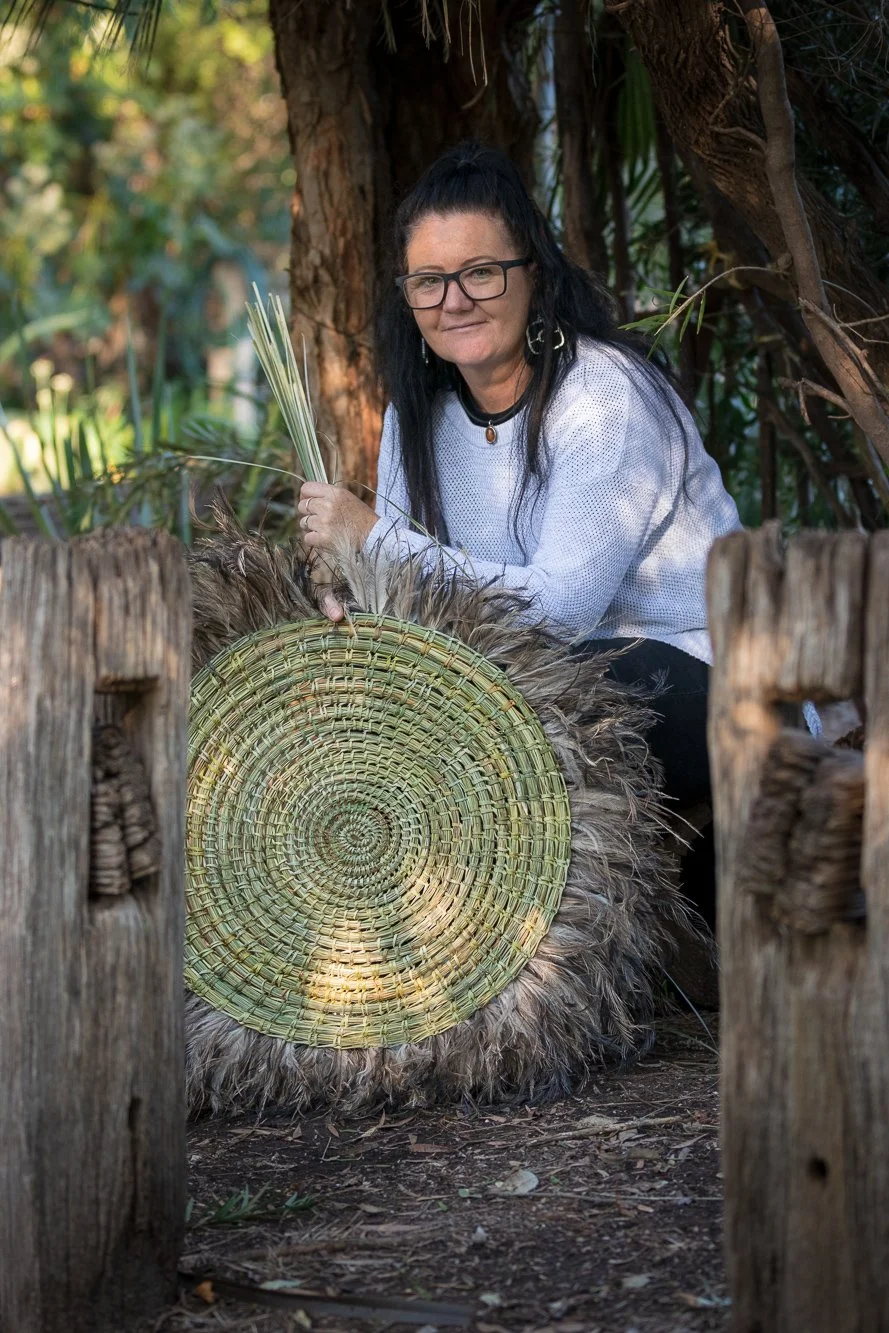
Cassie is from the Dja Dja Wurrung and Daungwurrung people from the Kulin Nation. She is a multi-disciplinary Indigenous artist. Her skills encompass weaving, fashion and jewellery design, painting, ceramics, bushtukka and cultural education. All of Cassie’s works have a deep connection to Country, biodiversity and traditional sustainable living of the past, to carry on in the present, for future generations to witness and learn.
She is extremely passionate about teaching her skills to both Indigenous and non-Indigenous people of all ages. Her aim is to provide participants with the opportunity to learn about and understand Aboriginal culture, and to develop knowledge of both historical and contemporary Aboriginal history.
Cassie says: “When someone else wears my designs, they’re wearing my culture, carrying the narrative of my ancestors, they are witnessing and learning our stories so that the stories can continue.” Cassie is generous with sharing her knowledge, “it’s about sharing important messages, and the meaningfulness of caring for Country and being sustainable in everything we do.”
Photo by KC Photography
-
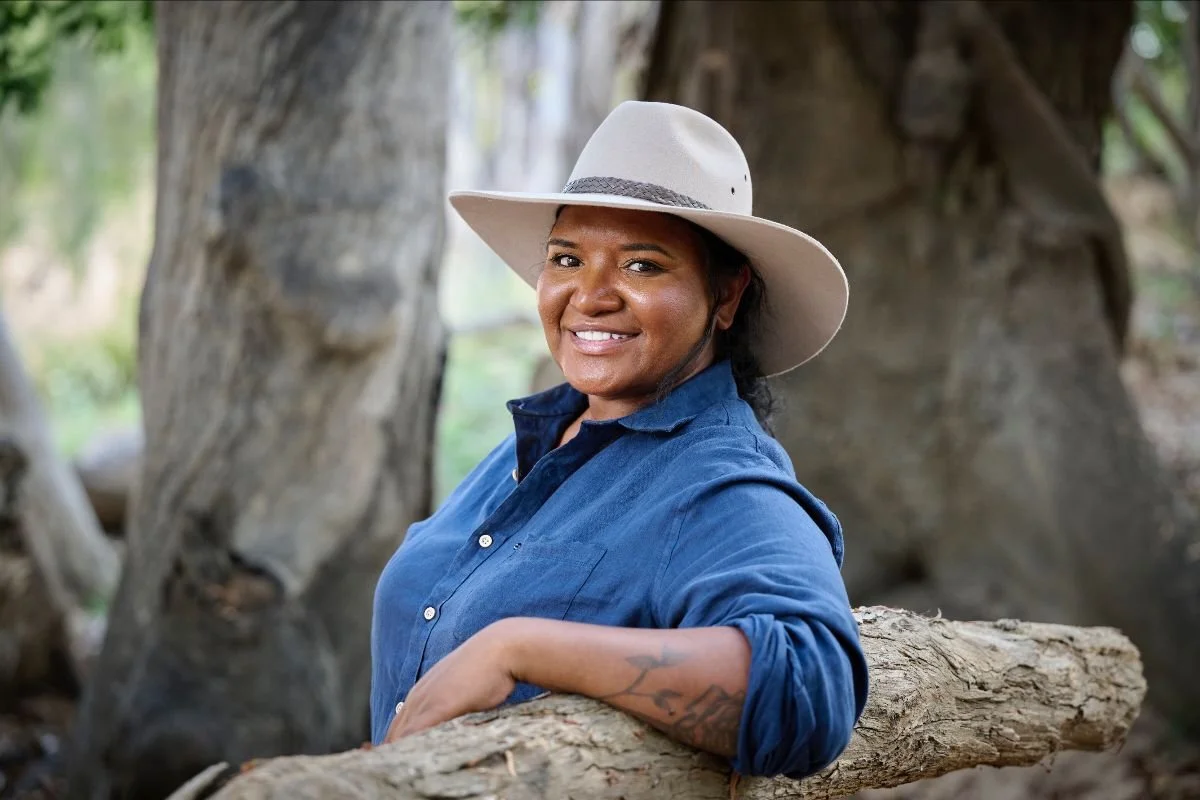
Erica Muriata is a proud Girramay woman from the Jumbun Aboriginal Community, located in the Murray Upper region, North-West of Cardwell, Queensland. As an emerging artist, Erica’s work is deeply rooted in her cultural heritage, drawing inspiration from the landscape, traditions, and stories of her ancestors. Her art reflects a strong connection to the Girringun Aboriginal Art Centre, where she continues to honour and celebrate her community’s artistic practices.
Erica’s artistic practice spans multiple mediums, including painting, ceramics, and weaving. She is known for her ability to capture the essence of the natural world through landscape scenes rendered in warm, earthy tones. These works evoke a sense of place, grounding viewers in the beauty and complexity of the environment she calls home. In addition to her paintings, Erica creates distinctive Bagu sculptures in clay, each piece uniquely expressing her connection to her culture and the land.
In recent years, Erica has gained recognition for her exquisite weaving skills, with her work in this area becoming highly regarded within the community and beyond. She is also becoming renowned for her craftsmanship in creating the Jawun — traditional woven baskets of the rainforest people — demonstrating an intricate knowledge of materials and techniques passed down through generations. Her mastery in weaving reflects both her personal connection to cultural traditions and her ability to adapt and innovate within them.
Erica’s art is not just a personal expression, but also a vehicle for preserving and passing on the stories of her ancestors. As the current keeper of these stories, she carries the responsibility of maintaining and sharing the cultural knowledge and traditions of her people. Raised by her parents — her father Jack Muriata, a respected Elder and community leader, and her mother Lillian Muriata, an accomplished painter — Erica inherited a rich legacy of storytelling and artistic expression. Through her work, she continues this tradition, ensuring that the stories of the Girramay people are kept alive for future generations.
Erica Muriata’s art is a powerful and evocative celebration of her heritage, her family’s history, and the land that shapes her worldview. Through her diverse range of works, she invites others to explore and share in the rich cultural narrative of the Girramay people.
Photo courtesy of Vivien Anderson Gallery.
-
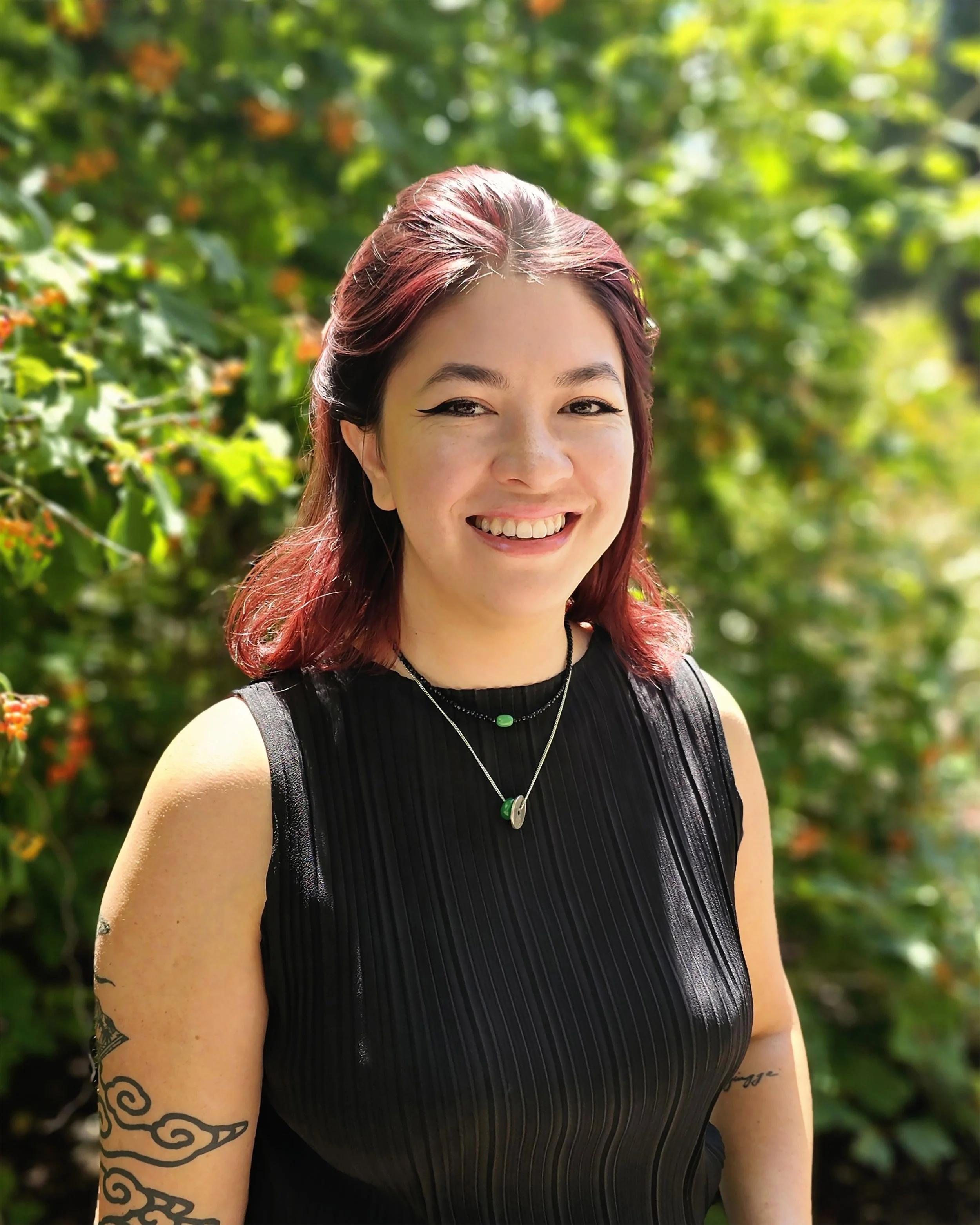
Gulumerridjin (Larrakia), Wardaman, and KarraJarri woman with Japanese, Chinese, Filipino, and Anglo-Australian (Irish and Scottish) ancestry, Jenna Lee is an artist whose practice examines language, materiality, and the transformation of inherited narratives.
Working primarily with books as colonial artefacts, Lee deconstructs and reconstructs their pages, often through weaving, to create new forms that are presented as new readings of the book. Through these processes, Lee reclaims materials once used to flatten and diminish complexity, allowing them to instead hold space for reflection and the creation of new knowledges. Her works have been exhibited nationally and internationally, with pieces held in significant public and private collections.
Photo by Anna Katsanevas
-
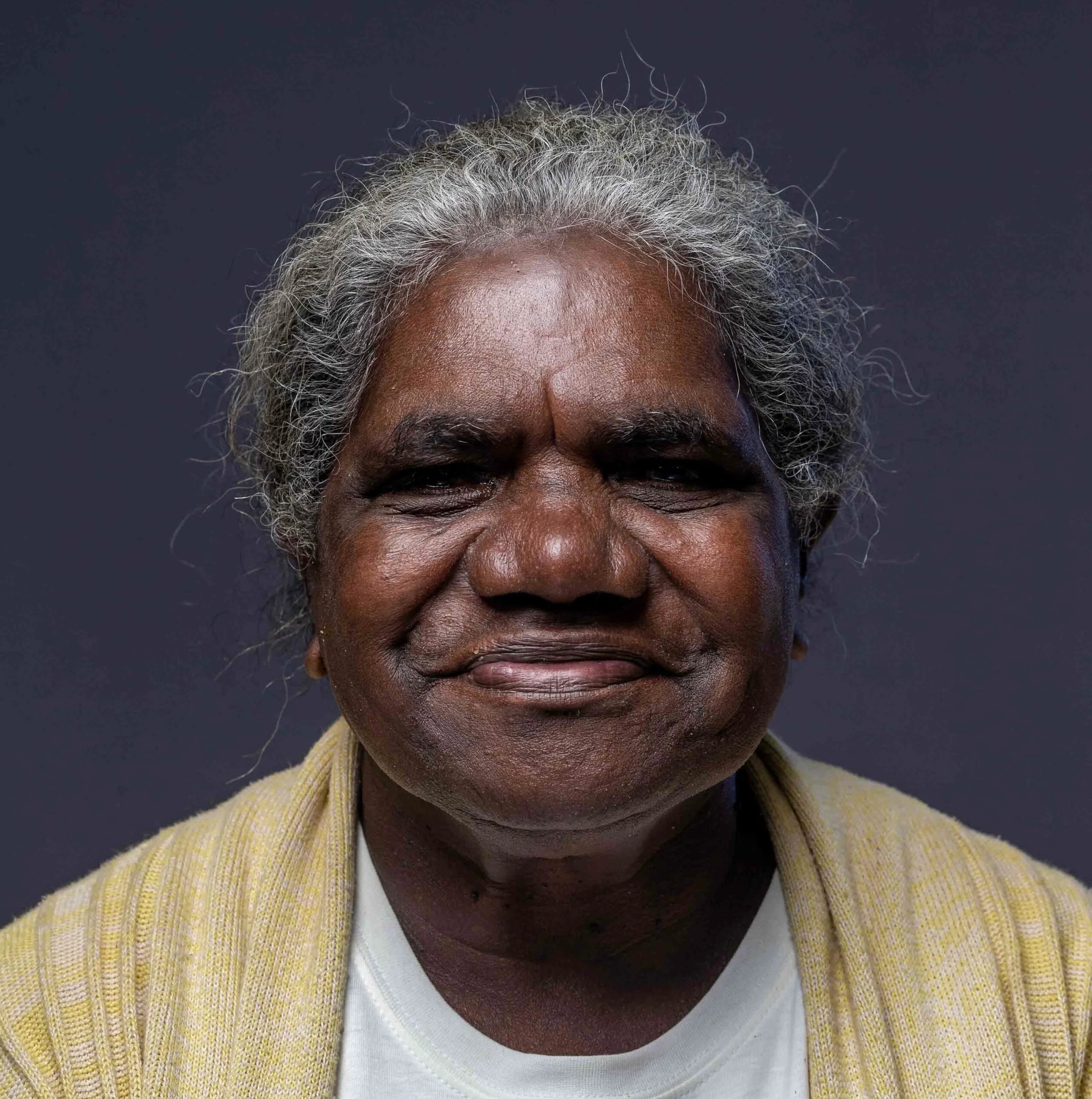
In Yolŋu language Milminydjarrk is the name of the sacred waterholes made by the ancestral Djan’kawu Sisters as they punched their dhorna (digging sticks) into the land at Garriyak. Milminydjarrk’s grandfather Birriguy was a strong Law man who taught his grandchildren ceremony and stories. After the death of her older brothers, she and her sisters have begun to paint designs that belong to the Djan’kawu Sisters.
In 2017 Milminydjarrk supervised a group of emerging weavers to learn the skills they needed to participate in the production of large-scale ‘Reflection Pods’, designed in collaboration with Lucy Simpson and Koskela designs and installed in Westpac Bank’s headquarters, Sydney. She has also been a teacher at Laŋarra Homeland school and engages regularly in teaching and passing traditional knowledge to younger generations.
Photo by Rhett Hammerton
-
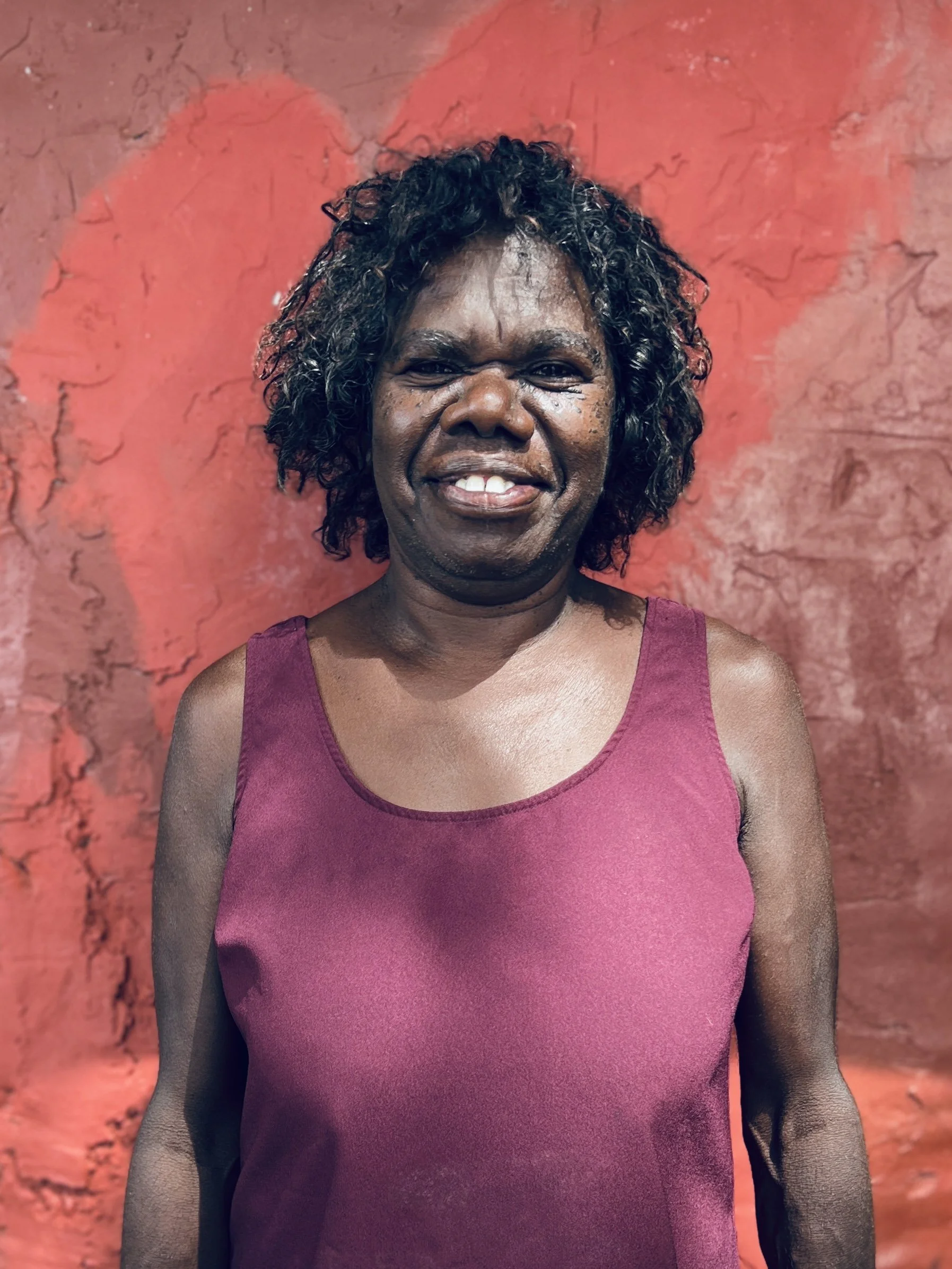
Jennifer Dikarr is a senior artist and the wife of fellow artist Alfred Walpay. Dikarr and Walway work closely together, often drawing on their traditional knowledge of materials and skills to produce new forms. Their collaborative sculptural works show their mastery of working with traditional media to produce artworks that are distinctly their own contemporary designs.
As a master weaver, Dikarr is known for her use of bold pinks, reds and purples, produced by dyes sourced from plants harvested at her mother’s homeland of Yilan. Yilan is located on the mainland east of Yurrwi (Milingimbi).
Photo by Mandi King.
-
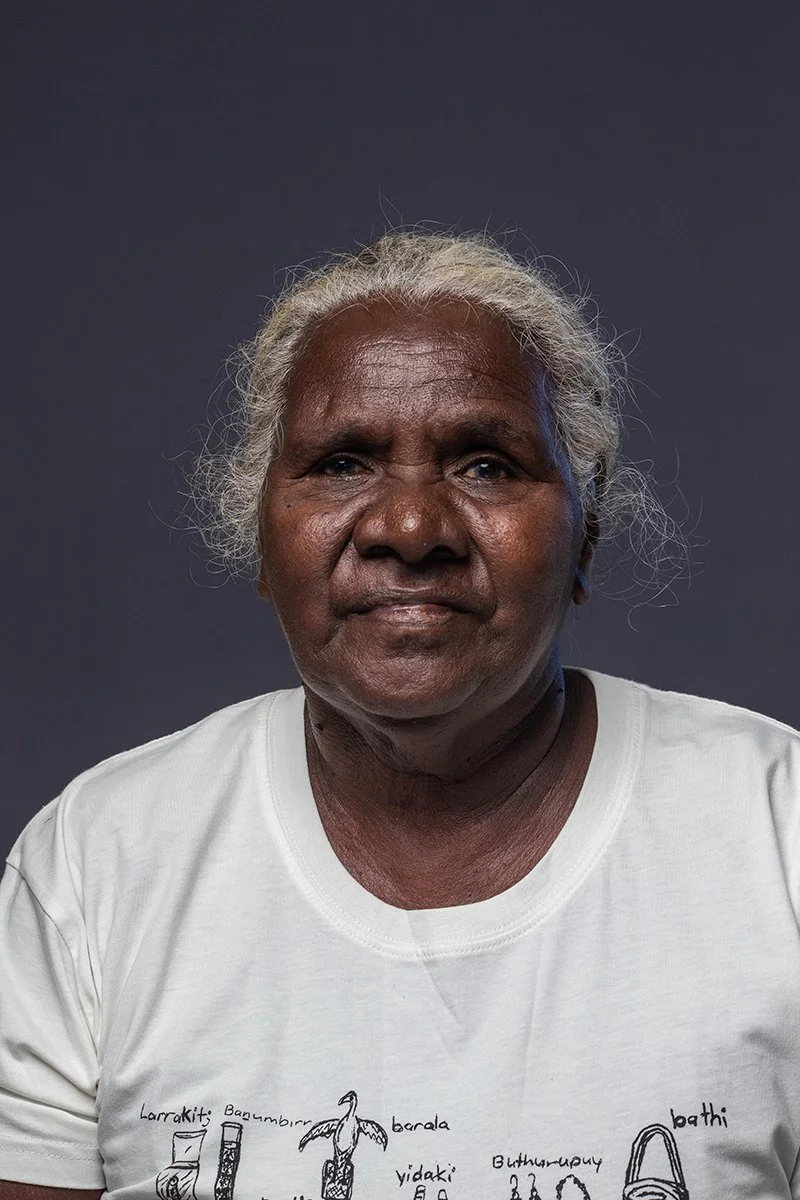
Margaret Gamuti is a senior Ŋaymil woman and an experienced weaver of both everyday and ceremonial objects. Gamuti’s country lies further east between Elcho Island and Gapuwiyak at Gunda’mirri, but she was born and raised on her kin country at Milingimbi.
Gamuti tells the story of when her father, Richard Muḻuyuḻk first moved to Milingimbi as a child before WWII, travelling by lipalipa (dugout canoe) from nearby Gatji on the mainland.
Gamuti’s ŋathi (father’s father) was Harry Makarrwalla, a renowned warrior, artist and ceremonial leader. Makarrwalla was a close friend and consultant for Lloyd Warner, the first anthropologist to spend considerable time working with Yolŋu while he was based at the Methodist mission in Milingimibi in the late 1920’s. Many international museums and galleries, including the National Museum of Australia, Art Gallery of WA and the Peabody Museum at Harvard University, hold works by Makarrwalla.
Gamuti says she learnt most from her ŋäṉḏi (mother), alongside other close kin like her märi (mother’s mother). Her mother, Bella, first taught her to weave under the solitary Tamarind tree that still stands by the tidal flats near where the Milingimbi school is located today. Gamuti explains she would watch her mother weave from a young age, and from about the age of 12 was encouraged to try herself. She began by helping her mother process the pandanus strands and then later took to weaving. She remembers weaving two ŋaṉbarra (conical woman’s mats) around this time.
As an adult, Gamuti worked closely with several Balanda (whitefella) educators, such as Alan Fidock, David Macleay and Michael Christie, where she learnt both English and Yolŋu literacy. This was during a time when the Milingimibi school was pioneering a strong bilingual and Two Ways curriculum. To this day, Gamuti is known for her skills in Yolŋu spelling and translation.
Gamuti is now a senior weaver at Milingimbi Arts and Culture and mentors other junior weavers in the specialised craft of harvesting, processing, dyeing and weaving both everyday and ceremonial objects. She says when she weaves, she still thinks of her mother and how these works connect her to her ancestors.
Photo by Rhett Hammerton.
-
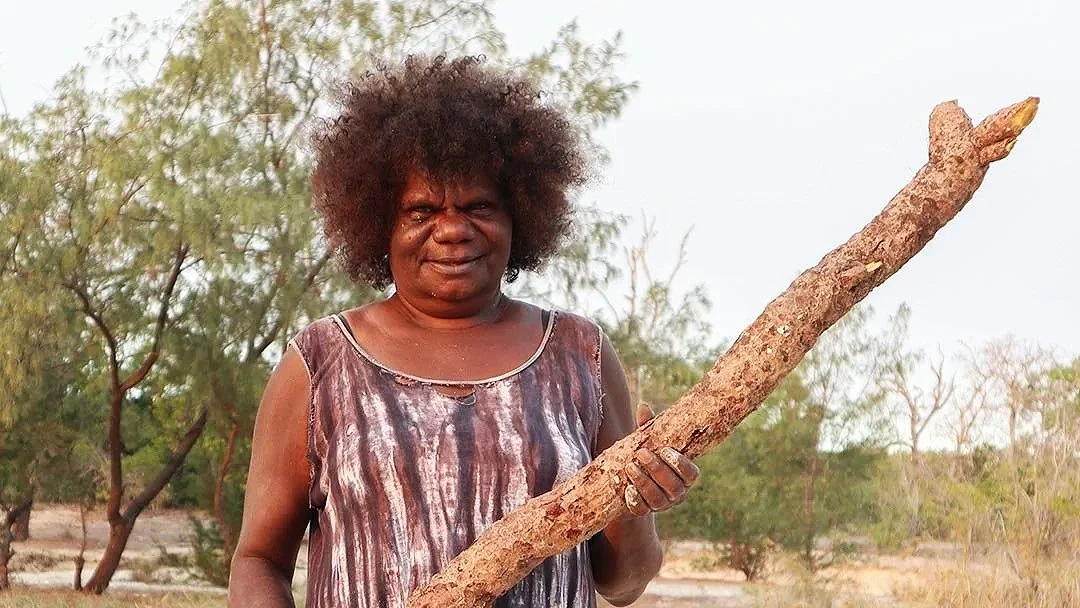
Markapuy a Gupapuyŋu Birrkili women and the oldest daughter of renowned Garrawurra weaver and painter Margaret Rarru. Her relationship as child of a Garrawurra woman makes her djuŋgaya for the Garrawurra clan. This means she has certain rights and responsibilities for the clan.
Along with all the other children and grandchildren of the Garrawurra, Markapuy is responsible for knowing everything about the law and ceremony of the Garrawurra and must carry out certain work. At ceremonies, particularly Ŋärra (Cleansing Ceremony), the Garrawurra leaders delegate work to their waku and gutharra (children and grandchildren in the female line). The waku and gutharra ensure the ceremony is practised correctly and also support it logistically, making sure that the right people are there, and painting the body paint designs onto participants. They also carry out other work to support the ceremony like cooking, cleaning and driving. They wear the Garrawurra body paint design, perform in the ceremony, and teach the ceremony to specific people.
Photo courtesy of Milingimbi Art and Culture.
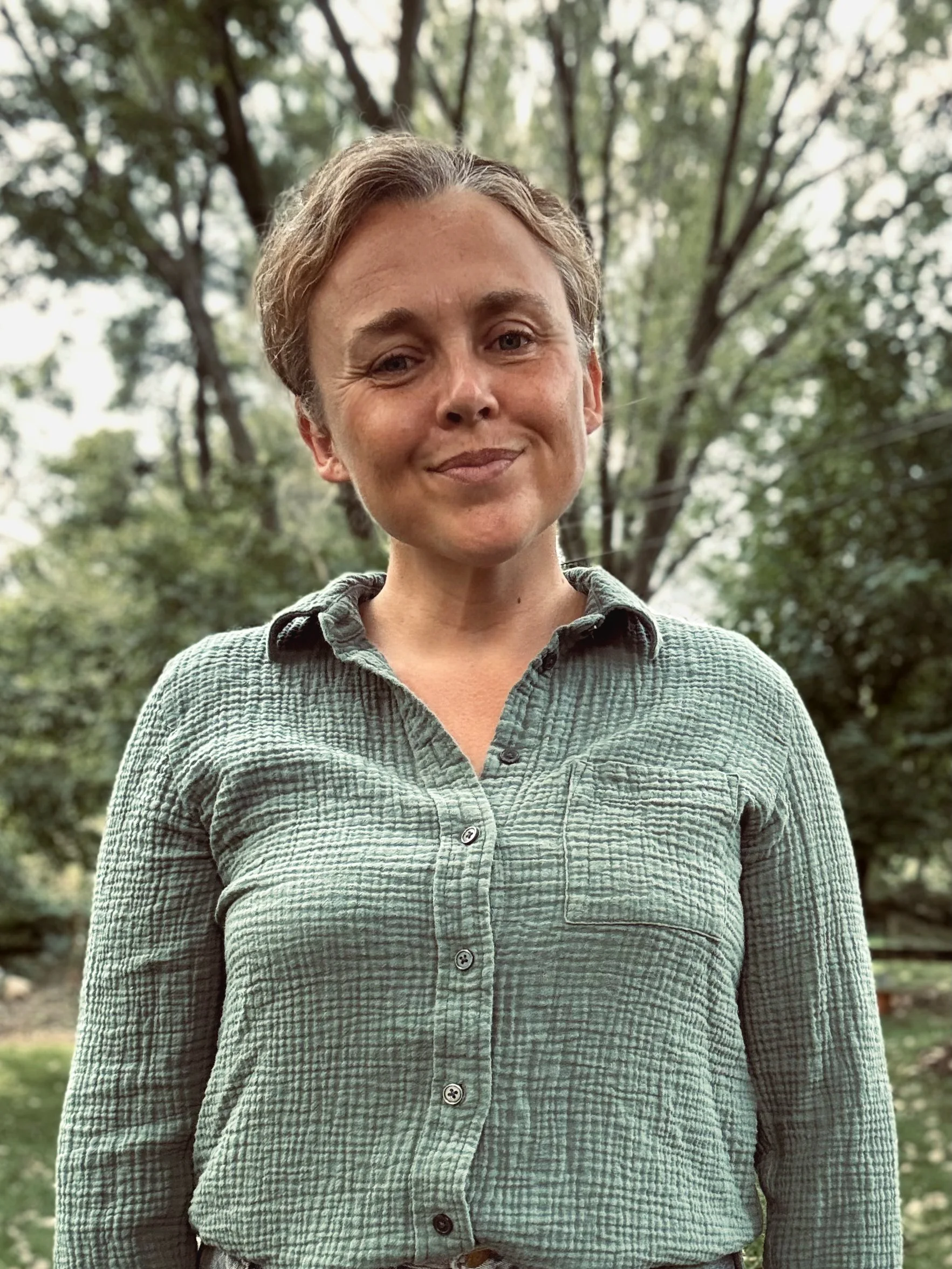
-
Amanda (Mandi) King is an arts worker and maker who has spent the past twenty years moving between creative practice and community programs. She has most recently worked with Indigenous art centres, including Milingimbi Art and Culture in North East Arnhem Land and Ninuku Arts in the APY Lands, supporting far remote artists to manage their businesses and develop professional pathways and opportunities.
Originally trained in glass and design at Alfred University (New York) and JamFactory Craft and Design Centre (Adelaide), Amanda’s practice has taken her to residencies in Australia, the United States, and Europe. She believes in the power of collective creativity and views cooperative studios as vital cultural spaces where art and community enrich one another, and new possibilities emerge. Her work is grounded in a commitment to helping artists build and sustain environments where knowledge, culture, and livelihoods can grow and thrive together.
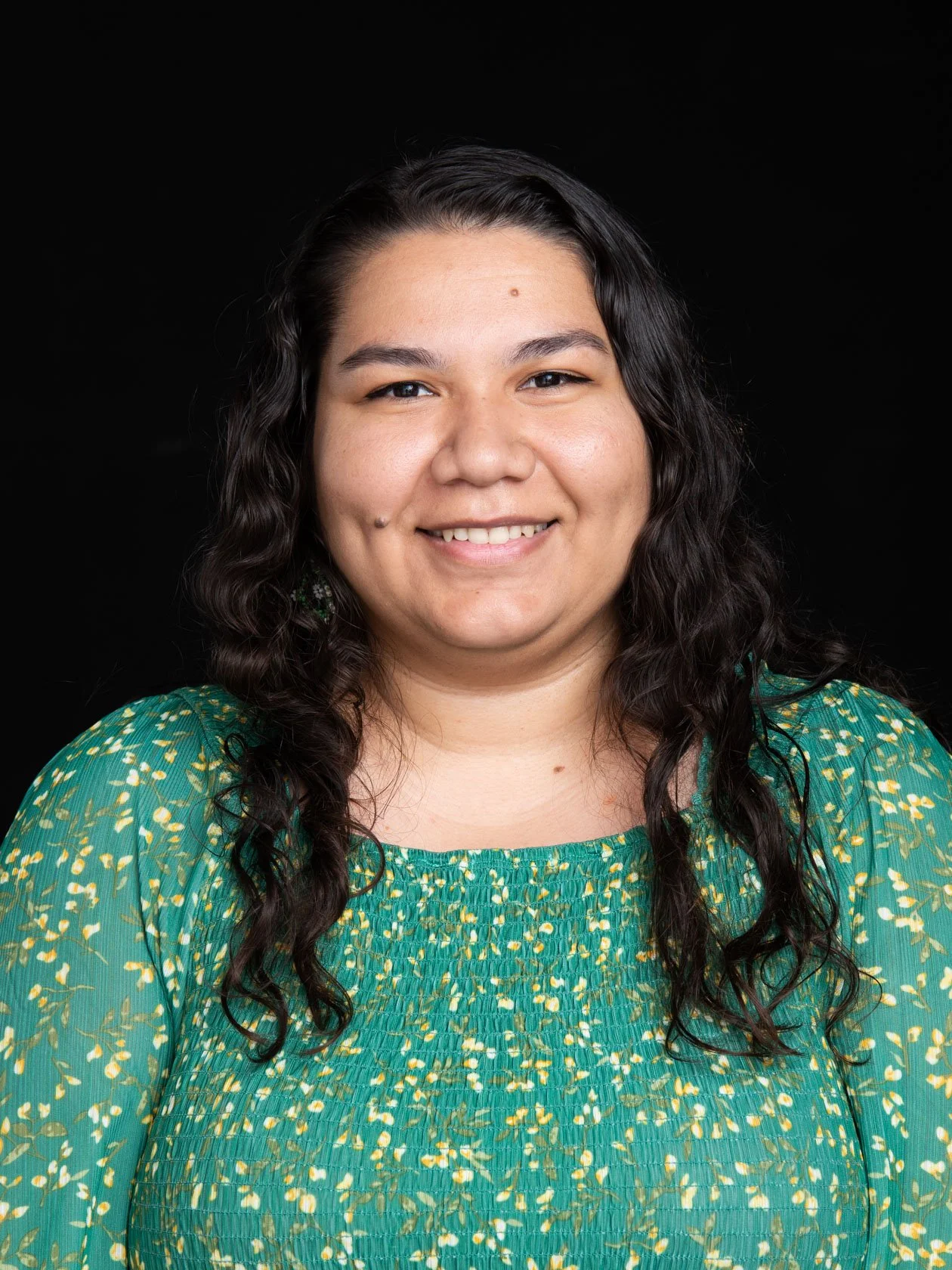
-
Rebekah Raymond is a proud Arabana, Kala Lagaw Ya and Wuthathi woman and a descendant of survivors of the Stolen Generations. She grew up on Larrakia Country and Limilngan-Wulna Country in the Top End of the so-called Northern Territory.
Rebekah has worked across independent projects and various institutions as a curator, educator, writer, and editor. She works at the Museum and Art Gallery of the Northern Territory as the Curator of Aboriginal Art and Material Culture.
Photo by Mark Sherwood, courtesy of Museum and Art Gallery of Northern Territory.

-
Hannah Presley is a Marri Ngarr curator living on Taungurung Country, she is currently Senior Curator, Art Museums at University of Melbourne. Her practice focuses on the development of creative projects, working closely with artists to learn about the techniques, history and community that inform their making, helping to guide her curatorial process. First Nations weaving and fibre practice have been central to her curatorial work for decades. Her recent curatorial project, titled the veil, is currently on at Buxton Contemporary.
Photo by Hayley Millar Baker
-
Sonja is a senior Quandamooka weaver. In her practice, she draws inspiration from the many stories connected to traditional Quandamooka weaving and also explores contemporary materials and techniques – in particular, discarded ‘ghost nets’ and fishing lines – that directly respond to concerns about the preservation of the natural environment.
An active member in her community, she is a leader in the regeneration of Quandamooka weaving, passing on cultural knowledge and skills through workshops, exhibitions, and field research.
She has shown in group exhibitions, including: On Country: Photography from Australia Exhibition in the Rencontres d’Arles France (2025); Seeds and Sovereignty: QAGOMA Collection (2024), QAGOMA; How We Remember Tomorrow (2024), Art Museum University of Queensland; Ngumpi: Create Exchange (2024), Redland Art Gallery; Mare Amoris: Sea of Love (2023) Art Museum University of Queensland; TarraWarra Biennale: ua usiusifa’ava’asavili:: (2023), Tarrawarra Museum of Art, Victoria; Gone Fishing (2023), QAGOMA; Perspectives of Brisbane(2023), Museum of Brisbane; The Space Between Us, Nuit Blanche, (2022) Toronto; HEAT (2022), Redcliffe Art Gallery, Queensland; Undertow (2022), Freemantle Arts Centre, Western Australia; Dabiyil Bajara: Water Footprints(2022), Tanks Art Centre, Cairns; Carriers of Memory(2021), Museum of Brisbane, Queensland; Open Hands(2020), Tarnanthi, Art Gallery of South Australia ; Long water: fibre stories (2020), Institute of Modern Art, national touring venues; Legacy: Reflections on Mabo (2019), Umbrella Studio Contemporary Arts and national touring venues; Australian Art Collection (2017), Queensland Art Gallery / Gallery of Modern Art, Queensland; and Gathering Strands (2016), Redland Art Gallery, Queensland.
Her work is held in the collections of numerous galleries including the Queensland Art Gallery, Museum of Brisbane, National Gallery of Victoria, National Museum of Australia, Art Gallery of South Australia, and Redland Art Gallery.
Photo by Jo-Anne Driessens.

-
Kylie is a proud Bundjalung artist, weaver, and arts worker from Northern Rivers, NSW. She is passionate about supporting and empowering local women creatively. Kylie is a volunteer producer and member of Casino Wake Up Time Group, a renowned weaving group that supports the cultural revival of Bundjalung weaving. Kylie has over twenty years of experience in education, focusing on community engagement and initiatives. She advocates for cultural and community empowerment and recently published "Bulaan Buruugaa Ngali... We Weave Together," highlighting women's stories.
Photo by Kate Holmes for the Publication Bulaan Buruugaa Ngali... we weave together.
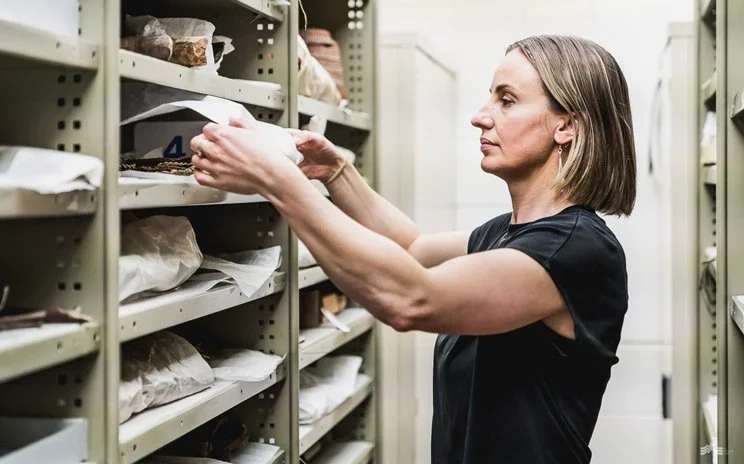
-
Zoe Rimmer is a proud Pakana (Tasmanian Aboriginal) cultural historian, curator and creative with almost two decades’ experience, both in the State museum and through her consultancy business, milangkani projects.
Zoe is passionate about increasing First Peoples’ voice and perspectives across cultural institutions and public spaces; as well as facilitating the revitalisation of cultural knowledge and practices, and inspiring new artistic expression through collections and archives. Her interest in public history and the importance of truth-telling also motivates her work. Zoe learnt the practice of basket making and shell stringing from her Elders and through cultural research and revitalisation projects. She also holds a PhD from the University of Tasmania, focused on First Peoples’ museology. Combining archival research and oral histories, her thesis documents the Pakana community campaign for the repatriation of Ancestral remains and cultural material, demonstrating the impact of this activism on Pakana cultural resurgence and global museum practice.
Photo courtesy of the artist and Tasmanian Museum and Art Gallery.
-
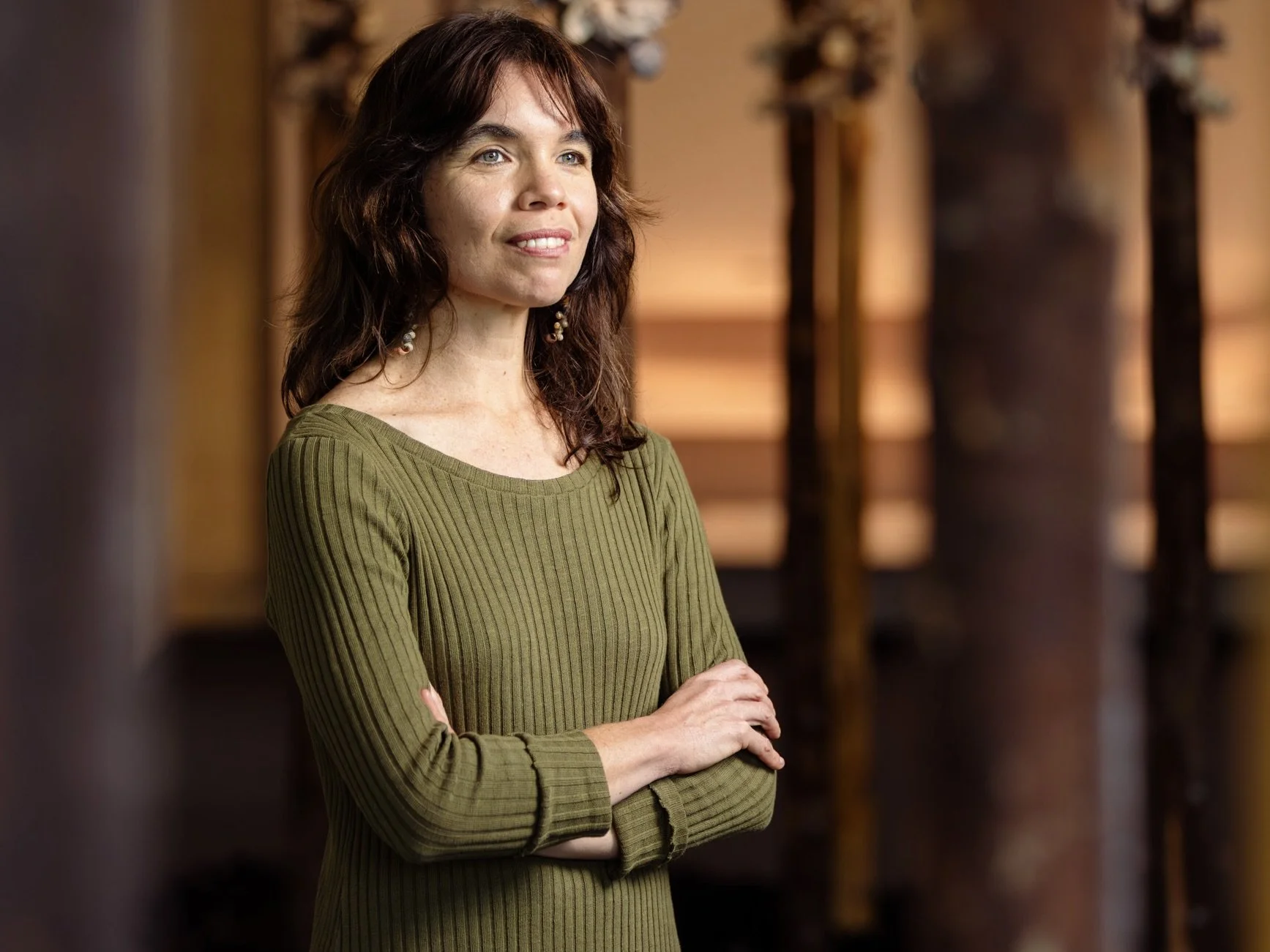
Freja Carmichael is a Ngugi woman of the Quandamooka people. Over the past decade, she has worked alongside artists and communities through exhibitions, programming, collection research, writing, and documentation in curatorial roles with art centres, regional galleries, contemporary art spaces, and national and international institutions.
Freja’s work is dedicated to sharing First Peoples’ weaving and fibre practices and creating spaces for exchange and collaboration through curatorial approaches. She is currently Curator at the University of Queensland Art Museum and a PhD candidate in Art History at UQ.
Freja was co-curator of The National 4: Australian Art Now at Carriageworks (2023). Her other curatorial projects include the national touring exhibition and publication long water: fibre stories (2020–22), presented by the Institute of Modern Art and co-curated with Tarah Hogue, Lana Lopesi, Sarah Biscarra Dilley, and Dr Léuli Eshrāghi; Transits and Returns at the Vancouver Art Gallery (2019); Layover at Artspace Aotearoa, Auckland (2019); and The Commute at the Institute of Modern Art, Brisbane (2018). She regularly contributes writing to exhibition catalogues and publications and is a member of the Kluge-Ruhe Aboriginal Art Collection Advisory Council at the University of Virginia, United States.
Photo by Joe Ruckli.
-
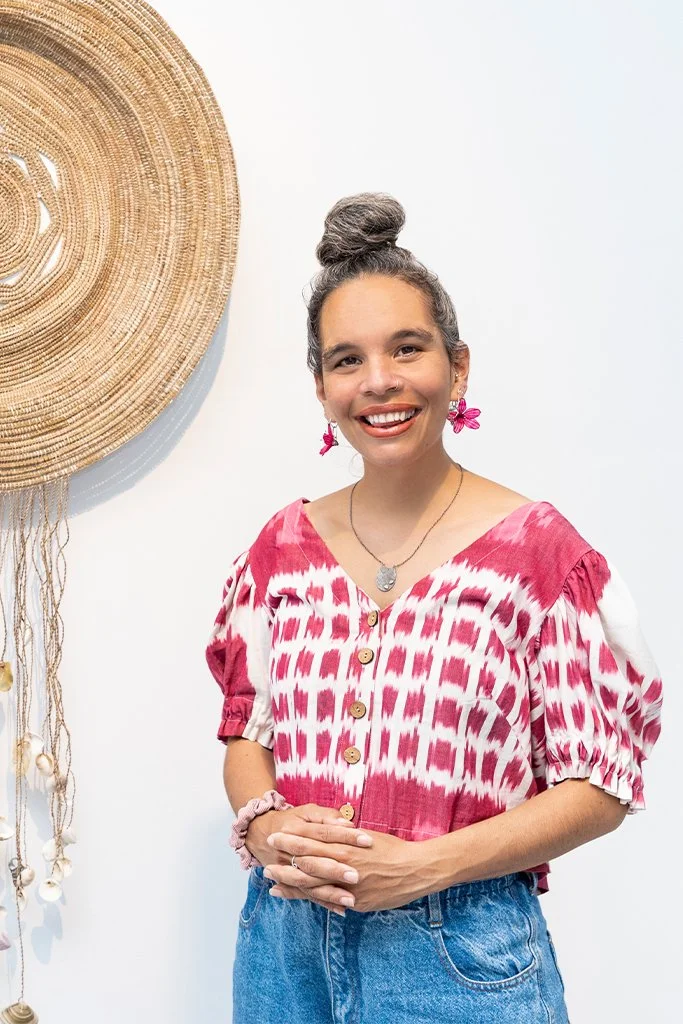
Elisa Jane Carmichael is a Ngugi woman of the Quandamooka People (Moreton Island/Mulgumpin and North Stradbroke Island/Minjerribah, Queensland). Elisa has a Bachelor of Fine Arts, Queensland College of Art, Griffith University; and a Master of Fine Arts, QUT.
As an artist, her practice draws on Ancestral knowledge, matrilineal connections, memories of place and relationships with Country. Elisa and her mother, Sonja, have collaboratively been at the forefront of gathering knowledge, learning, and experimenting to revitalise the unique traditional practice of Quandamooka weaving and explore its creative applications to contemporary fibre art. Elisa further develops her practice through both new techniques and materials, acknowledging, nurturing, and protecting her culture and the resources of Quandamooka Country. Her regular inclusion in national survey exhibitions and major prizes demonstrates her conceptual explorations through weaving, sculptural materials, cyanotypes and now printmaking.
Elisa is a fourth-time finalist in the Telstra National Aboriginal and Torres Strait Islander Art Awards (2025, 2023, 2021, 2018) and a recent recipient of the Highly Commended Ruth Amery Award for the Wangaratta Contemporary Textile Award (2025). Recent group exhibitions include Under The Big Blue Sky, Casula Powerhouse (2025); Deep Blue, Pine Rivers Art Gallery (2024); Photo 2024 Melbourne (2024), CREATE EXCHANGE: Ngumpi, Redlands Art Gallery (2023); ua usiusi faʻavaʻasavili, is an alagāʻupu, Tarrawarra Biennale 2023; Naadohbii: To Draw Water at the Winnipeg Art Gallery (2022, Canada); BunjilakaAboriginal Cultural Centre, Melbourne Museum (2022-23); and Pātaka Art + Museum (2023, New Zealand); the Busan Biennale (2022); Undertow at the Fremantle Arts Centre; Primavera 2021 (Museum of Contemporary Art, Sydney) and Tarnanthi (Art Gallery of South Australia 2020).
Elisa’s public artworks include the Woolloongabba train station as part of the Cross River Rail Station Art Program (2024), Ozcare Newstead, QLD (2023) Strings of Waterholes, Herston Quarter, Brisbane QLD (2022), Maitland Regional Council, Newcastle NSW (2022) and Water is Life (2021) at South Bank Parklands, Brisbane, QLD. Elisa’s works are held in private and public collections across Australia, including The British Museum, Museum of Contemporary Art (Australia), Art Gallery of South Australia, National Gallery of Victoria, Queensland Art Gallery | Gallery of Modern Art, Art Gallery of Western Australia, University of Queensland Art Museum, Griffith University Art Museum, QUT Art Museum, Queensland Museum, and Bendigo Art Gallery.
Photo by Louis Lim courtesy of Onespace
-
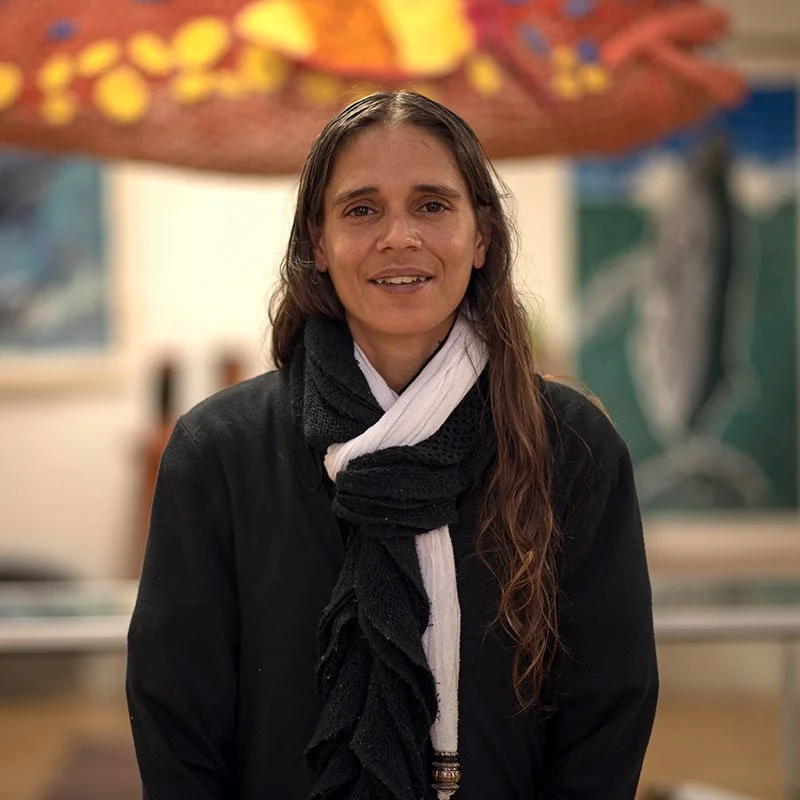
Collette Gray was born in Ceduna, South Australia. She has been closely affiliated with Arts Ceduna since 2014, where she currently works as a Senior Arts Worker. As an artist, her primary medium is working with acrylic paint on canvas; however, she regularly experiments with medium selection, incorporating wooden boards, corrugated and metal panels, and exterior paints. She has also painted large-scale murals.
Collette is highly inspired by both her mother, Janine Gray, and her in-laws, the Lawrie-Lennon family. Collette’s key accomplishments include engaging in thrifty and sustainable creative practices. Another of her achievements, which she takes pride in, is her long-term commitment to serving the arts community at Arts Ceduna.
Collette continues to draw inspiration from the surrounding environment of the West Coast of South Australia, where she lives and grew up. She also keeps the knowledge strong from her Gugada/Kokatha Elders, passed on to her, and she is proudly continuing to teach the younger generation of artists in Ceduna, and her own children. Collette is inspired by, and often paints the unique place titled ‘Ceduna Waters’, which is located east of Ceduna when heading towards Shelley Beach.
Photo courtesy of Arts Ceduna.
-
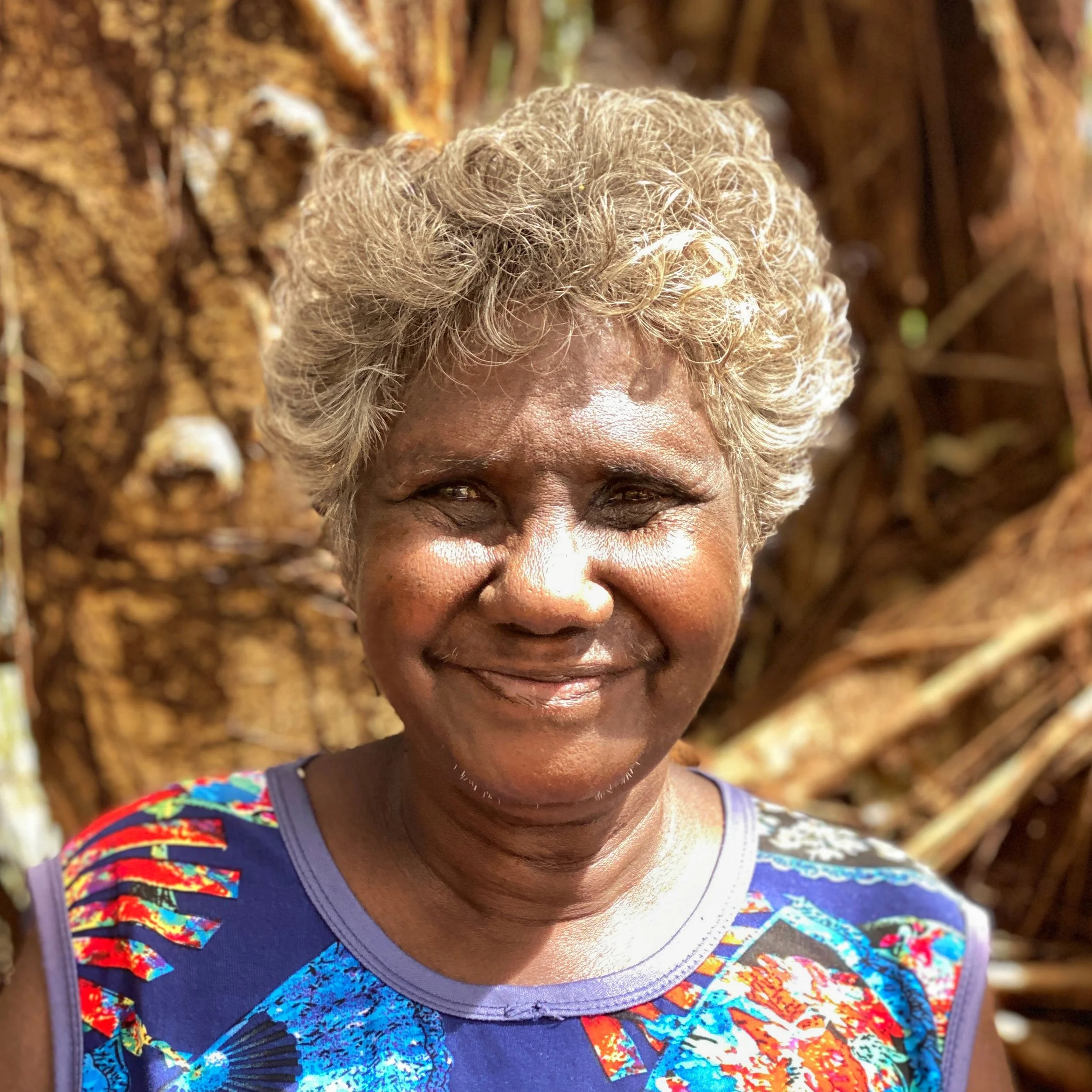
Evonne Munuyngu was born at Mirrngatja Outstation on the Eastern edge of the Arafura Swamp, later moving to Galiwin’ku for schooling. Munuyngu was taught to weave by her mother and other family and would often collect pandanus on her way home from school to practice. Evonne attended Shepherdson College on Galiwin’ku (Elcho Island) before marrying and moving to Gapuwiyak (Lake Evella) with her husband (dec.). It was here that Evonne began working at the local shop and later as a cleaner at the school. After the death of her husband, Evonne moved to Ramingining to be close to her family.
Since 2003, Munuyngu’s dilly bags, woven mats, and balgurr string bags have been featured in several group exhibitions throughout Australia, cementing her position as a talented and passionate artist. Evonne collects pandanus and weaves daily alongside her sister, Master Weaver Mary Dhapalany, and extended family at Bula’bula Arts.
Photo courtesy of Bula’bula Arts.
-
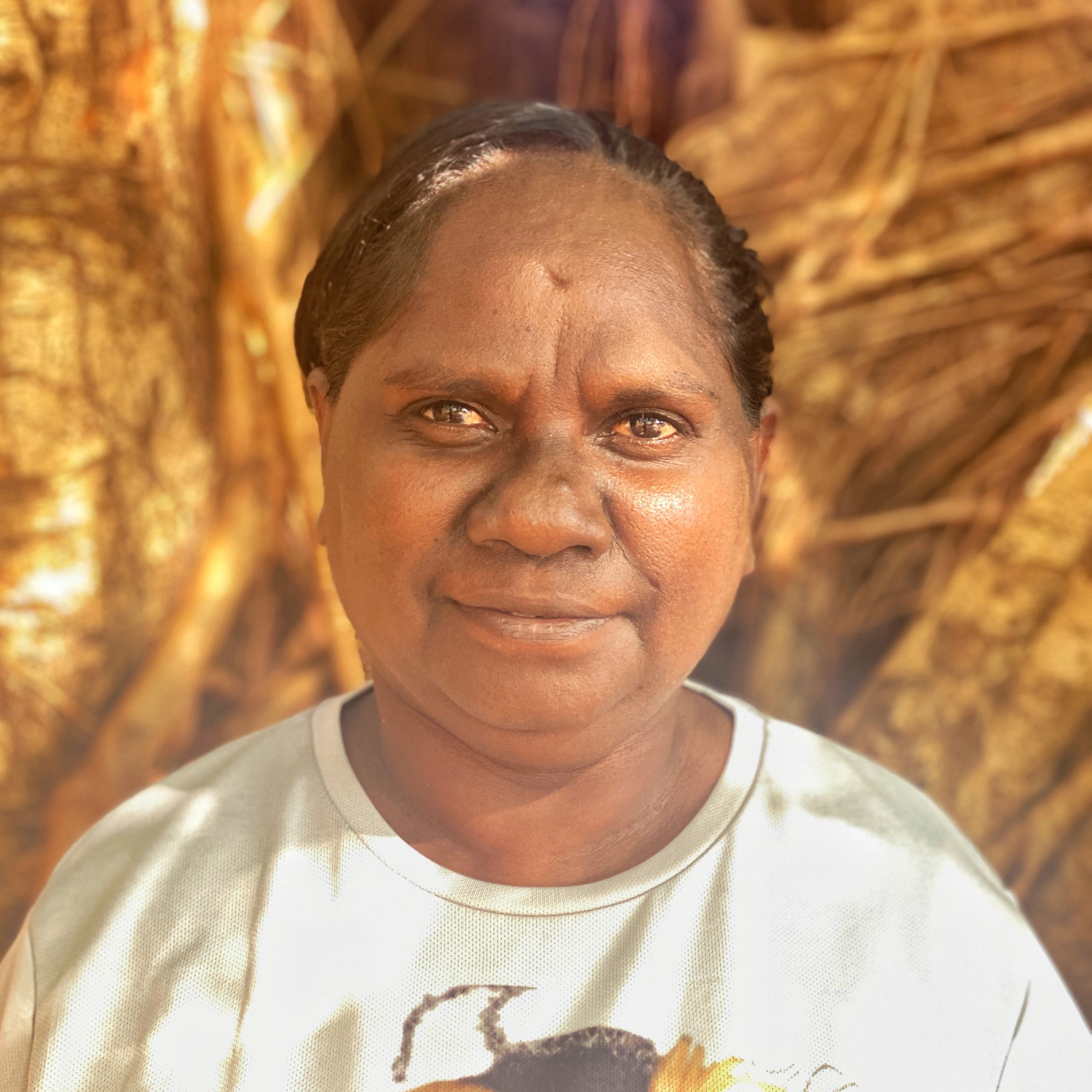
Cecilie is an early career fibre artist whose work mostly comprises of woven mats. She has an eye for subtle detail that makes her pieces striking and immensely popular.
Cecilie grew up surrounded by strong, accomplished weavers. She learnt to weave from her mother, Joy Gadawarr, her aunties, Evonne Munuyngu and Mary Dhapalany, and continues to weave alongside her sister, Melinda Gedjen. Cecilie continues to learn from the older women and pass this knowledge onto her daughter, whom she is currently teaching. Cecilie's totems are Sugarbag and Mewal.
Photo courtesy of Bula’bula Arts.
-
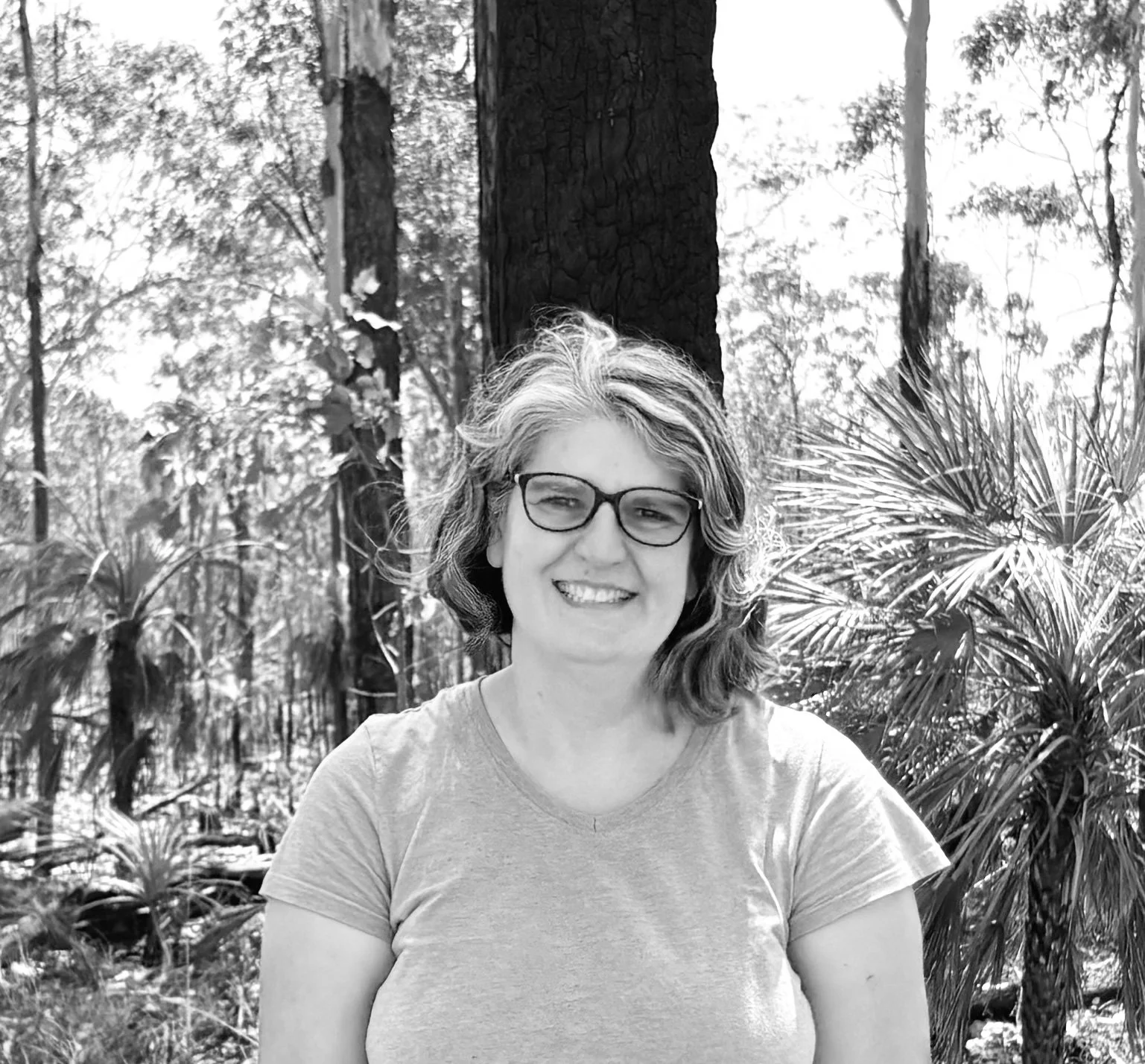
Mel George’s past two roles, have been to amplify the visibility of artistic excellence that exists in inaccessible areas of our country by curating exhibitions, representing artwork at art fairs and festivals, recording cultural storytelling and engaging visitors with first-hand authentic experiences with Yolŋu and Pitjantjatjara artists.
She was a practising artist for over 20 years, specialising in the medium of glass and exhibited her work worldwide.
George has held roles at Craft ACT: Craft and Design Centre in which she started the inaugural DESIGN Canberra festival, Manager of Ernabella Arts and is the current Executive Director of Bula’Bula Aboriginal Corporation. George proudly sits on the Board of the Darwin Aboriginal Art Fair Foundation.